|
|
Your product keeps proving its value: usage grows and customers rely on it more over time. Yet, the lifetime value of each customer barely changes. Every time you think about raising prices or adding an upsell, the same questions make you pause.
What if they cancel?
What if they think I’m being greedy?
What if this ruins the trust I’ve built?
So you hold back, watch competitors charge more, and reassure yourself you’re being “customer-first.”
Over time, that choice turns into a pattern and growth starts to feel capped by your own principles.
The solution isn’t choosing between growth and integrity. It’s learning how to increase customer lifetime value (LTV) — each customer’s worth over time — without tactics that feel manipulative.
The Three Elements of Ethical LTV Growth
LTV grows when pricing follows value, not the other way around.
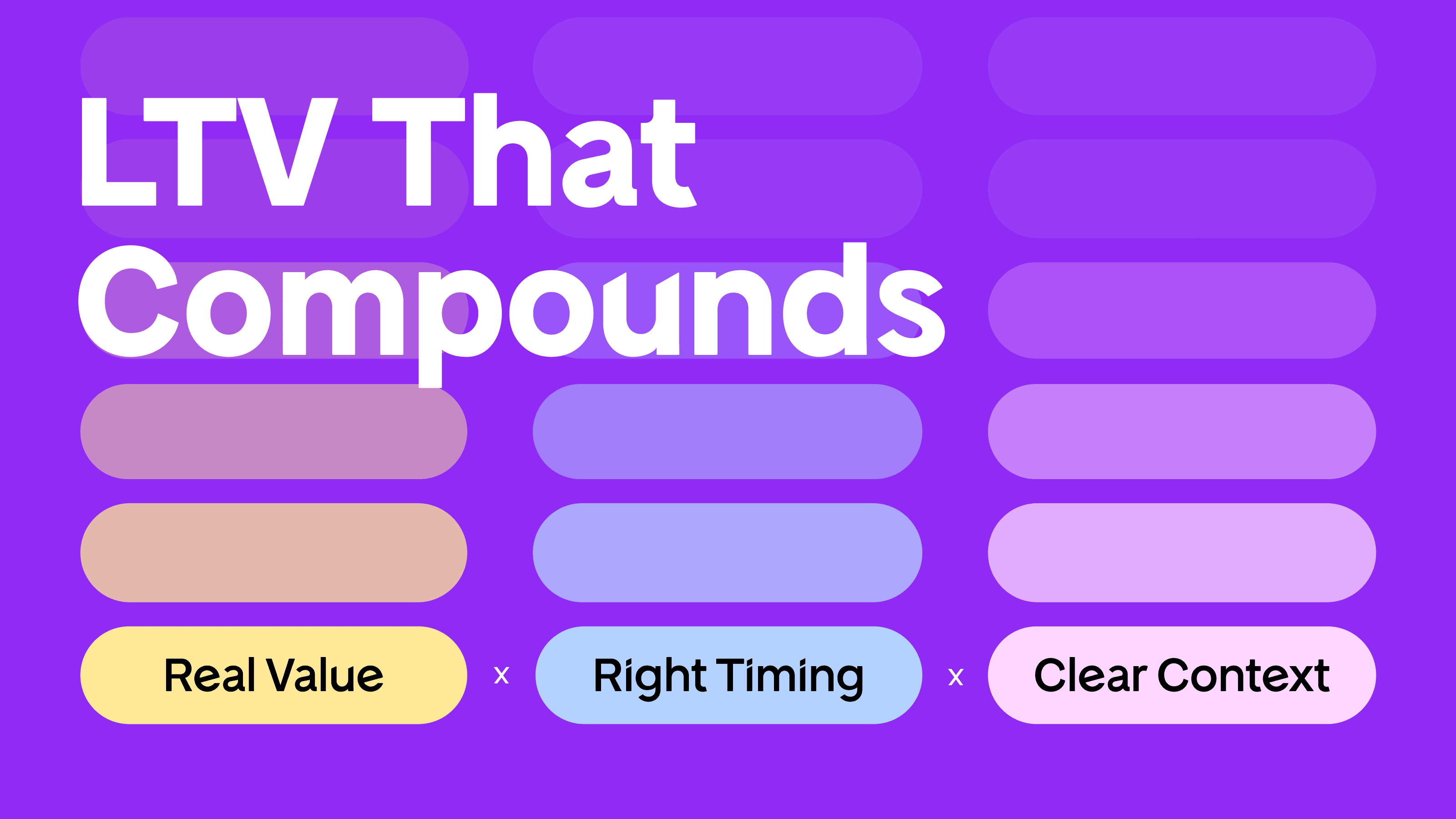
Think of it as: Value × Timing × Context

- Value: Users get a result before you ask them to upgrade — they solve a problem, make money, or ship faster.
- Timing: The upgrade appears when users actually need it, such as when they hit a limit mid-task.
- Context: The prompt ties to their action, like trying to use a locked feature.
Here’s how to make the above equal LTV growth.
Trials That Educate Instead of Pressure
Trials should prove value, not hint at it. When designed well, they help users understand the product before committing.
For example, Stockpress’ users couldn’t experience the full potential because the premium features were locked behind a paywall. Once they let new customers use the complete product for two weeks, conversion rate jumped from 10% to 25%.
Still, offering trials isn’t enough if users don’t use the features.
Databox had a 14-day trial to unlock key integrations like Google Sheets, but over 50% of users never opted in. Interest wasn’t the problem. Users just didn’t realize they needed it yet.
So, instead of requiring opt in, Databox gave every new user full access to all premium integrations from day one.
Activation rates jumped as users explored integrations they otherwise would’ve missed. Even downgraded users retained a stronger connection to the product because they had already built workflows with those premium features.
Choosing the Right Trial Model
Most products fit one of three approaches:
- Freemium for when users need time to build habits before value clicks.
- Time-limited trials work when value shows up quickly.
- Reverse trials give full access upfront, then scale users back to a free tier.
- Both Stockpress and Databox gave users premium access by default and removed friction before the value was clear.
Our State of Micro SaaS 2025 data revealed that trials significantly outperform freemium and 70% of micro-SaaS teams require credit card upfront, but this only works when time to value is short.
David Kemmerer, CEO of CoinLedger, says:
“For us, the value moment is when clients see their messy data from different exchanges organized into a clean dashboard. Had we put a credit card barrier at the start, we would have lost 83% of potential users before they even saw what our software could do.”
Trials answer “is this worth it?” Plan structure answers “which option suits me?”
Feature Packaging That Increases ARPU Naturally
Users choose plans faster when it’s clear which plan fits their needs.
Here’s how to create that clarity.
Describe Plans by What Users Can Do
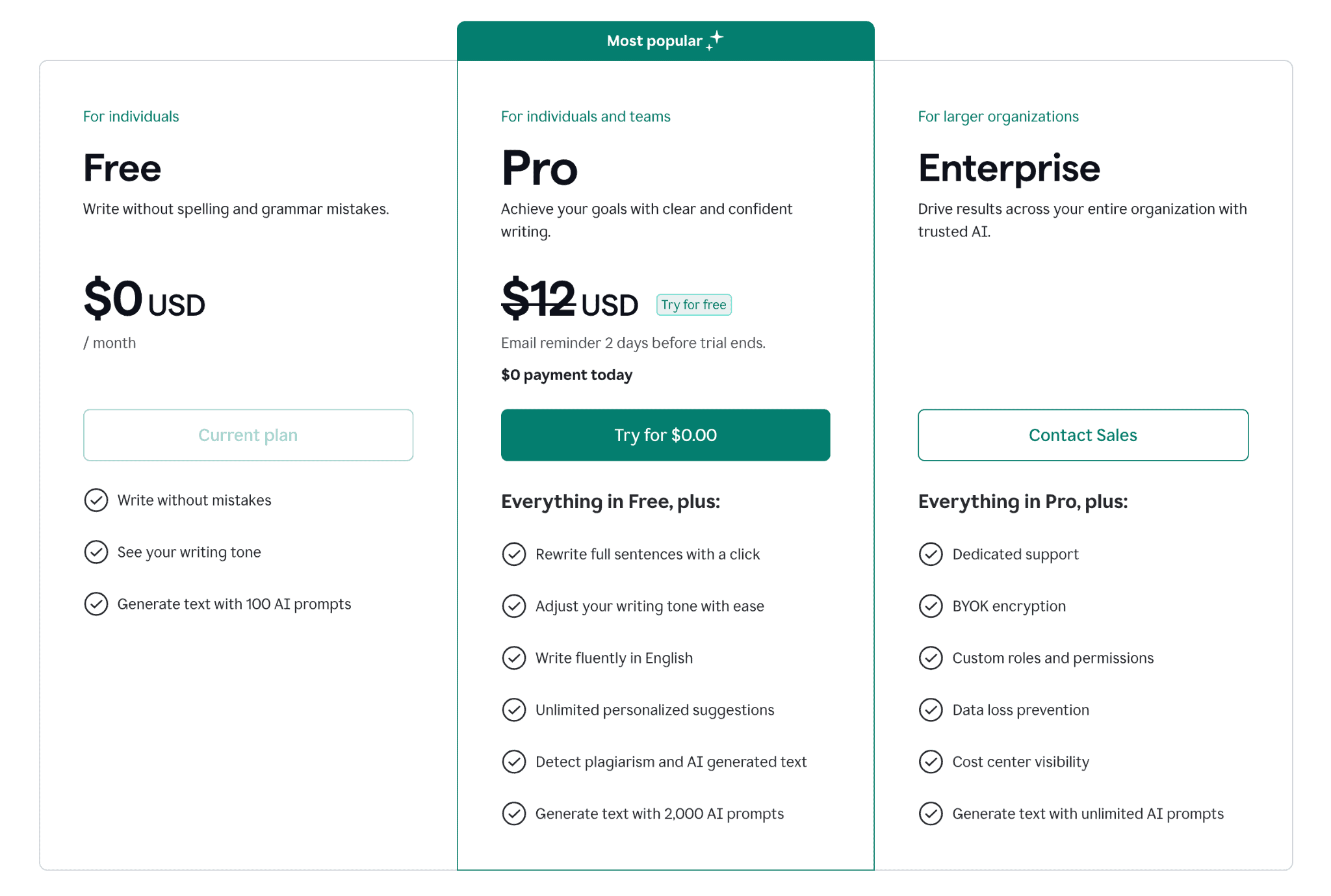
Frame each plan around outcomes. For example, Grammarly describes the tasks you can accomplish in each tier:
Make the Base Plan Valuable on Its Own
The base plan should work end-to-end. Use upgrades to support bigger needs, not to fix an incomplete experience.
That said, give away too much and users leave satisfied without paying.
David Kemmerer learned this when his free tier let users import everything and see their final tax gains/losses for free.
We thought the convenience would convince them to purchase. They took advantage of this — imported their data, typed the final numbers into their tax software, and left.
To fix that, David restructured the free tier: users can import and track their portfolio for free, but tax reports required a payment.
The result: conversion rate increased 6x.
Scale One Core Job, Not Ten
Build plans around one core task. Higher tiers should add capacity: more projects, seats, API calls… not a grab bag of unrelated features.
Arvid Kahl warns that piling features into plans creates a “Frankenstein’s monster” product:
If you do one thing only and speed up your product by 10%, all of your users will benefit from that immediately. If you solve ten different problems and speed up one of them by 100%, you will still leave most of your customers receiving zero benefits from that.
When plans build on each other, users are more likely to move up to higher tiers.
Read also: How to Prioritize Features in Your Software Product Roadmap
Structure Your Plans
Start with the outcome your product delivers, then build tiers around scale.
- Make the core job available on every plan
- Separate by capacity (e.g., Starter gets 5 projects, Pro gets unlimited)
- Simplify if users spend over a minute on the pricing page or support gets “which plan?” questions
Most teams start with 2–3 plans, assign features to tiers, and then adjust based on what customers choose.
See also: High-Converting Pricing Pages: 23 Tips and Examples to Help You Build One for Your Software Business
After structuring your plans, the next question is when to show upgrade prompts.
Contextual Upsells That Add Value, Not Pressure
The most effective upgrade prompts show up when users hit a limit and need to keep going.
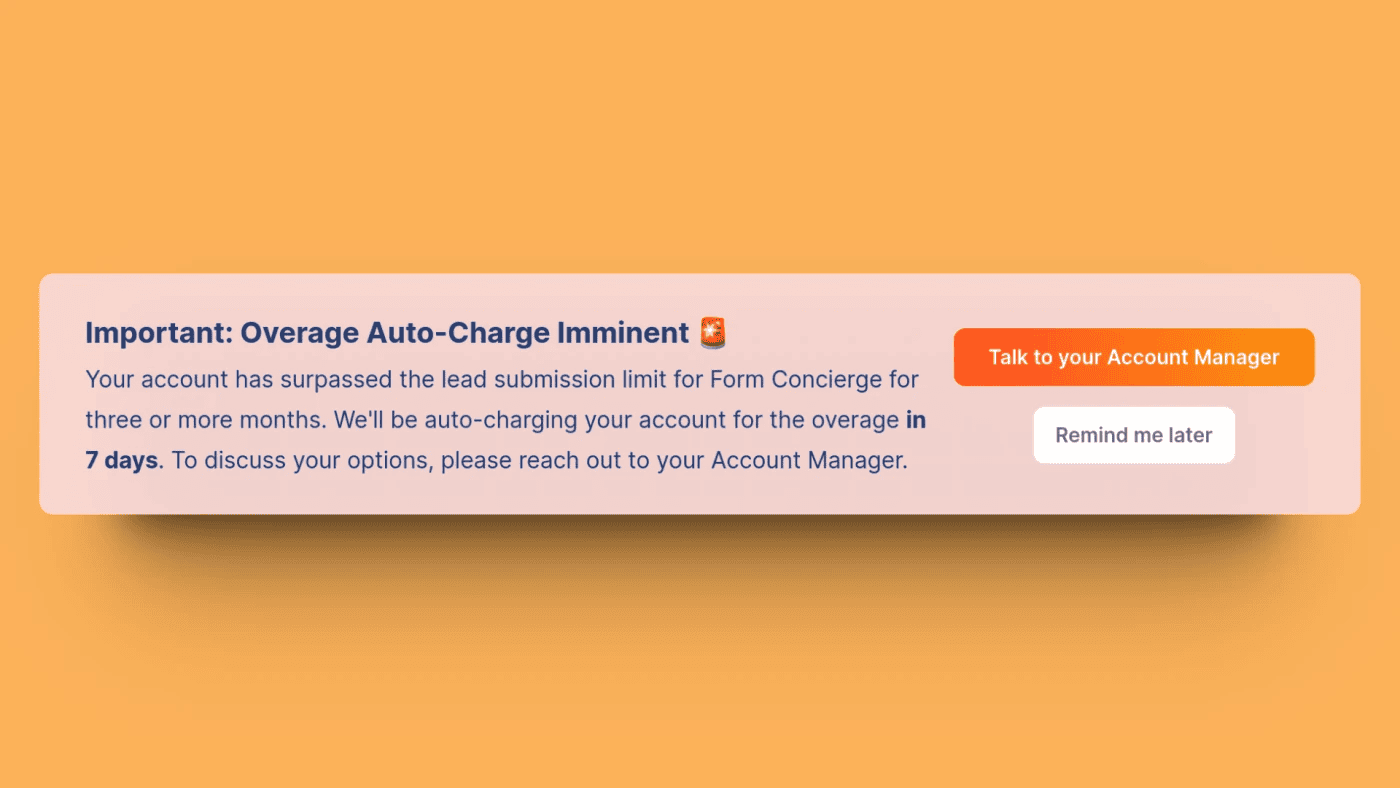
Chili Piper struggled to get this right with their Form Concierge product. When users exceeded their tier’s usage limit, they could only upgrade through their Account Manager via email.
Elyssa Stewart, former Director of Product Management at Chili Piper, explains the challenge: “If users go over their submission limit in a given month, we didn’t have a good way of making sure they were updating their contract once that threshold was passed.”
Her team added in-app banners that let users book a meeting with their Account Manager directly.
The result: 40+ meetings booked in two weeks, generating $30k ARR initially and $150k ARR within a month.
Tie Prompts To Usage Limits
Chili Piper’s banners appeared when users exceeded their tier’s submission count. The prompt explained the limitation and offered a direct path to resolve it (booking time with an Account Manager).
The context made the upgrade feel necessary, not pushy.
Make The Path Straightforward
Link straight to checkout or, like Chili Piper, to the person who can complete the upgrade.
They integrated their own scheduling tool into the banner. One click opened a booking modal inside the product — no context switching, no hunting for an Account Manager’s email.
For users who clicked “Remind me later,” an automated email followed up two days later. This kept the conversation going without being intrusive.
Show One Clear Unlock, Not a Feature List
Acknowledge what the user is trying to do, then explain that upgrading unlocks the way to do it.
At ProductLed, Anastasia Kudrow’s team replaced “unlock premium features” with: “You’re trying to [complete this task]. Upgrading to Pro lets you do this now.”
That simple change brought the upgrade conversion up to 64%.
Fewer Prompts, Better Moments
Show upgrade prompts only when they remove friction. When they appear too often, users learn to dismiss them reflexively.
The fix: limit prompts to moments where upgrading is the only way forward. One well-timed alert at a limitation converts better than multiple annoying reminders when users haven’t experienced the product’s value yet.
Usage-Based Add-Ons (Without Nickel-and-Diming)
Usage-based works when it maps to recognized value. It scales when users trust the system.
Trust comes from showing users exactly what they’re using, what it costs, and what happens when they approach limits.
Here’s how to build that transparency:
Show Usage in Real Time
Show current usage, remaining capacity, and limit consequences in one place. When users can check anytime, pricing feels manageable.
RuleInside’s clients see all of the above in their dashboard.
“We’ve designed our billing system to be completely transparent with no surprise charges, because we know how frustrating unexpected fees can be for business budgeting,” says founder Stefano Bertoli.
Explain Costs Before They Hit
If usage triggers additional charges, show users exactly what comes with the higher fees before they commit.
When RuleInside shifted from one-time project fees to subscription plus usage-based pricing for AI voice agents, they started disclosing overage rates upfront.
We showed clients exactly how usage translates to cost before they commit. Most SaaS companies hide usage complexity behind tiers. We exposed it and let clients model their own costs.
Clients can also calculate their costs based on expected volume before signing up.
“This built trust immediately. Companies serious about volume saw the economics clearly. Those not ready self-selected out,” Stefano explains.
The result: Lifetime value per client tripled and client satisfaction improved as transparency removed the fear of unpredictable bills.
Alert Users Before They Hit Limits
Warn users close to their limit so they have time to upgrade, adjust usage, or increase their cap before anything stops working or charges pile up.
“We send automatic alerts when you reach 80% and 90% of monthly minute allocation. These alerts include your current usage, remaining minutes, projected overage based on current pace, and options to upgrade your plan or set usage controls,” Stefano says.
This is where short-term monetization decisions start to compound into long-term outcomes.
The LTV Flywheel: Why Ethical Monetization Compounds
When pricing matches value, customers upgrade when they need more, stick around because switching takes effort, and recommend you because it feels fair.
Over time, those effects stack.
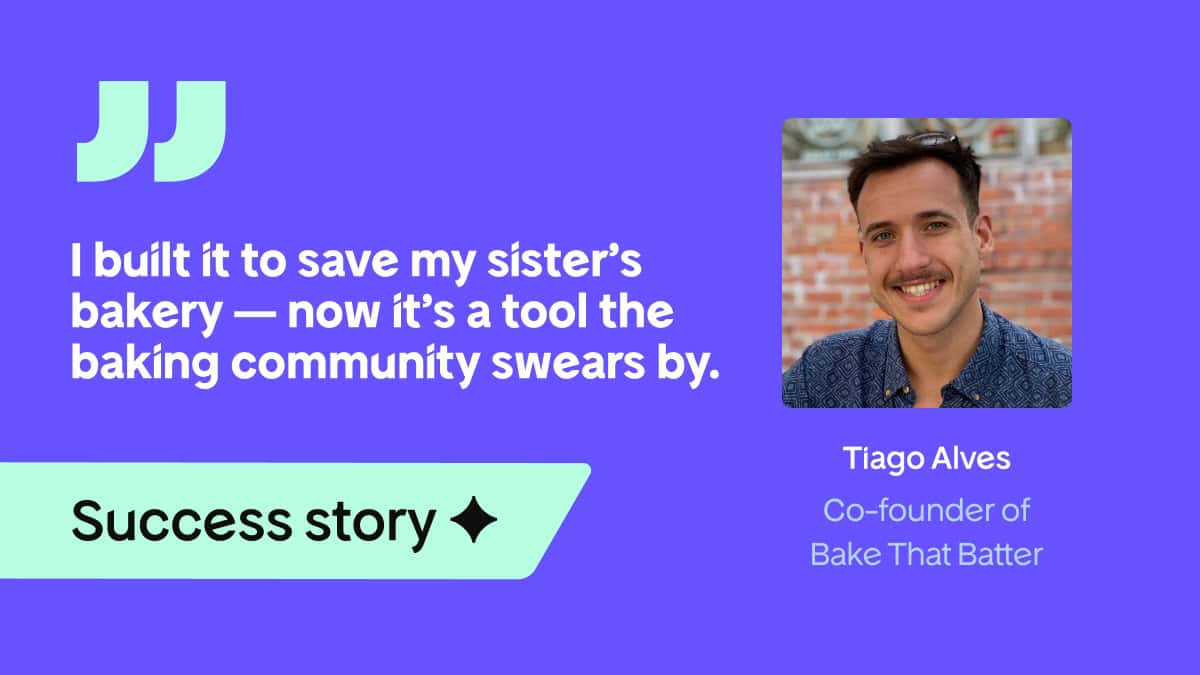
Tiago Alves saw this with Bake That Batter, a software tool built to rescue his sister’s bakery. Word spread and 150+ bakers adopted it as essential infrastructure.
I didn’t do any marketing. Most growth came from word-of-mouth and when I finally introduced paid plans, 83% of them converted immediately.
This pattern repeats across small SaaS teams. MicroConf’s survey of ~700 indie founders found 50% rely on communities and referrals, reporting stronger LTV than teams on paid acquisition.
Additionally, Wynter’s survey of 100 B2B SaaS marketing executives found that 73% of buyers trust peer recommendations over other sources.
This is why ethical monetization matters strategically, not just morally.
How This Compounds
None of the above requires dramatic changes or aggressive upsells.
- Customers stay because the product fits their workflow and pricing follows usage
- Better retention gives customers time to expand as they grow
- Expansion proves the product scales with their needs
- That experience becomes the story they tell others
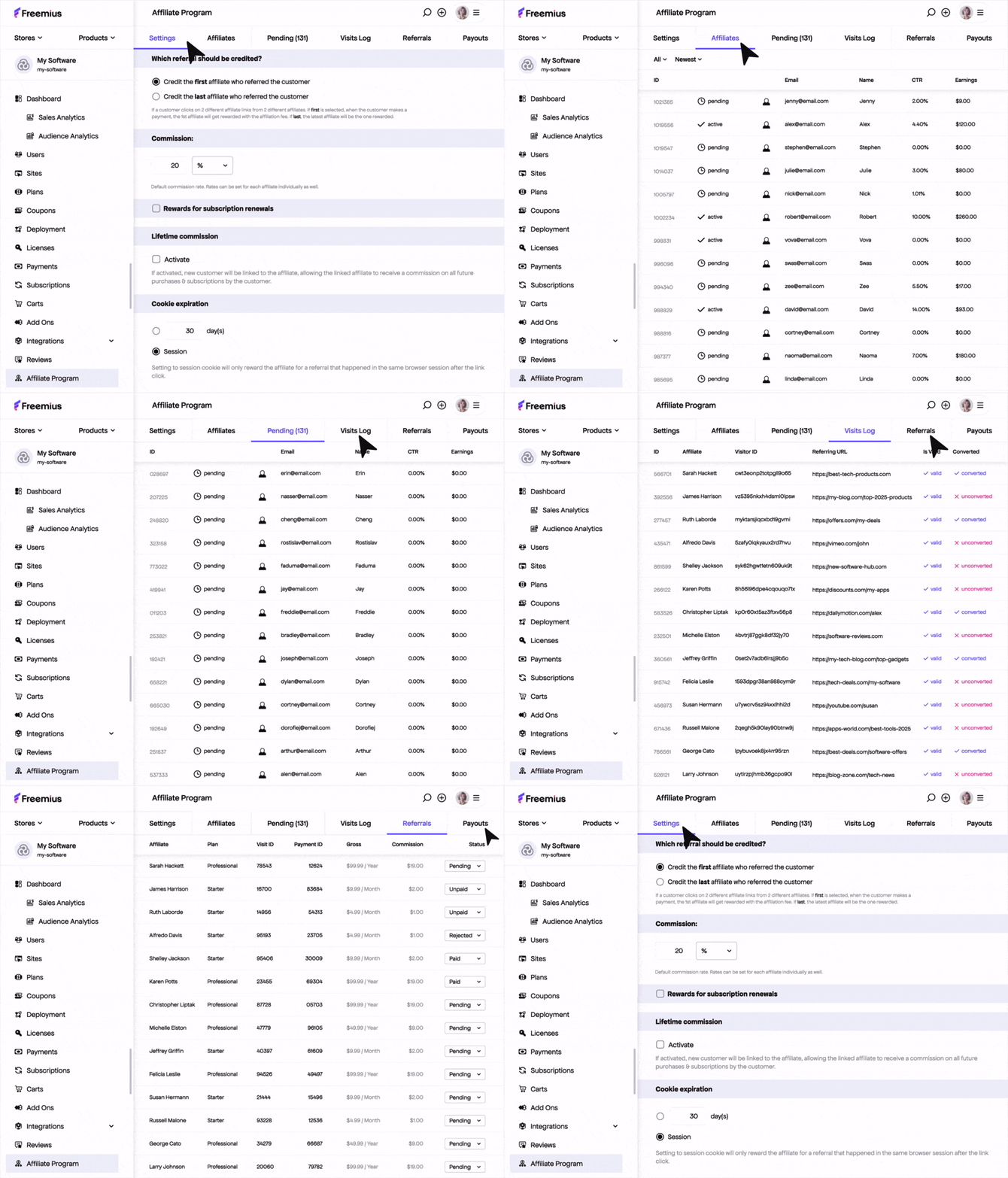
For small teams, this creates growth without constant acquisition spend. Freemius’ affiliate platform supports this, giving customers a way to recommend you and making referrals trackable.
But the foundation isn’t the infrastructure. It’s building something customers trust enough to recommend without being incentivized.
Why Most LTV Growth Tactics Backfire
Many founders treat LTV as a pricing problem, tweaking plans, testing discounts, polishing copy. But pricing only works when the system is sound. If upgrades don’t map to usage and needs, no optimization fixes that.
Aggressive upsell tactics can lift short-term revenue, but they erode the conditions that make LTV grow sustainably.
The Real Cost of Pressure Tactics
Trust erodes. Users feel rushed and question your intent. A few moments of pressure create enough friction that they tune you out.
Retention drops. Quick upgrades don’t last when they’re driven by prompts instead of need. Once the pressure stops, users disengage faster.
Revenue doesn’t compound. You get the upgrade, but not the expansion, renewals, or referrals that actually grow LTV.
These downsides all point to the same issue: upsells alone don’t build real lifetime value.

When Upsells Fail
- Before value is proven. If users haven’t seen the product work yet, any upgrade prompt feels pushy.
- Without context. If the upgrade isn’t triggered by their action, it’s random noise.
- Repeatedly without change. If nothing changed since they dismissed it first, showing it again trains them to ignore all prompts.
What drives the upgrade is need, not your quota. Wrong timing means upgrades don’t stick (and LTV stays flat).
Tooling Up for Ethical LTV Growth
Implementing value-led monetization requires infrastructure. For most small teams, that means piecing together payment processors, licensing systems, analytics, and tax compliance.
Freemius bundles these into a single platform:
- Checkout and payments are handled as a merchant of record, including automatic tax compliance for EU VAT and US sales tax across 245+ jurisdictions.
- Feature gating and plan flexibility let you test different structures (tiered plans, add-ons, one-time purchases, subscriptions) and adjust based on what customers choose.
- Trial support covers time-limited trials (credit card optional or required) with built-in conversion tracking.
- Revenue analytics surface MRR, conversion rates, churn patterns, and cohort behavior so you can see what drives expansion.
- License management works across SaaS, desktop apps, and WordPress products from a single dashboard.
- Customizable license units let you label what you’re selling (seats, activations, credits), so pricing reflects your product model.
Instead of building separate systems, you get infrastructure that makes upgrades straightforward, revenue transparent, and expansion sustainable.
Turn Ethical Monetization Into Compounding Growth
Every upgrade you earn the right way makes the next one easier. Customers stay longer, expand when they need to, and recommend your product because it keeps working for them.
You don’t need to redesign pricing or rebuild the product. Start with one change:
- Make plan differences clearer
- Tie upgrades to usage limits
- Add prompts that show what unlocks at each tier
Just one of those shifts can make upgrades feel like the natural next step instead of pressure.
If this approach resonates, we can help you put it into practice. Book a discovery call with our CEO.