|
|
The ideal merchant of record provider evolves with your SaaS company’s growth, offering features optimized for distinct needs across various stages. Selecting an unsuitable provider can lead to outgrowing your tools or paying for unnecessary complexity.
SaaS companies typically face tradeoffs with merchant of record providers, including:
- Operational burden vs. control
- Simplicity vs. customization
- Upfront effort vs. long-term scalability
At startup stage, the right call is usually accepting less control in exchange for speed: fast setup, tax compliance handled, minimal configuration.
At growth stage, that calculus shifts: you need more customization in subscription management and pricing, even if it means more operational involvement.
At enterprise, the tradeoff is upfront effort for long-term scalability: complex implementation, significant onboarding, in exchange for the billing flexibility and compliance rigor that high-volume global operations require.
This article maps seven merchant of record providers to the stage where they deliver the most value, so you can find the right fit for where your business is now.
At a glance: Merchant of record providers by SaaS stage
| Stage | MRR range | Best-fit providers | Optimize for |
| Startup | Under $10K | Freemius (4.7%), Gumroad (10% + $0.50), Lemon Squeezy (5% + $0.50) | Speed to first revenue |
| Growth | $10K–$500K | Freemius (4.7%), Paddle (5% + $0.50), FastSpring (custom) | Retention and global scale |
| Enterprise | $500K+ | Cleverbridge (custom), 2Checkout (custom), PayPro Global (custom) | Process and compliance |
What a merchant of record actually does
A merchant of record (MoR) is the legal entity responsible for processing and completing software sales on your behalf.
When a customer buys your product, the MoR becomes the official seller for that transaction. That’s why the customer sees the MoR’s name — not yours — on their credit card statement.
Behind the scenes, two transactions happen during the purchase process:
- The end customer buys from the merchant of record
- The merchant of record pays you after deducting fees and taxes
Because the MoR is the legal seller, it assumes full legal responsibility for the financial, tax, and regulatory obligations tied to the transaction.
When you use MoR services, they typically manage:
- Payment processing across credit cards, PayPal, and local payment methods
- Real-time tax calculation based on buyer location
- Tax collection, remittance, and filing for EU/UK VAT, US sales tax, and other regional requirements
- Fraud prevention and chargeback handling
- Payment Card Industry (PCI DSS) compliance and broader payment security obligations
- Consumer protection and regional regulatory compliance
- Currency conversion and localized checkout experiences
For SaaS companies selling globally, this removes a significant operational burden.
Without a merchant of record model, you remain fully responsible for the entire order process and all associated liabilities. That means managing tax registrations, staying current with changing international tax laws, handling disputes and fraud risk, and ensuring compliance in every market where you sell.
As your business expands internationally, that complexity grows quickly.
In some regions, selling directly may also require establishing local legal entities, opening regional merchant accounts, and navigating country-specific compliance requirements — a process that can take months to years depending on the market, with legal and administrative costs that add up even before the first sale.
An MoR helps businesses bypass much of that operational overhead and start accepting payments globally much faster.
How an MoR differs from a payment processor or payment gateway
A payment processor handles transactions. A merchant of record handles transactions and takes legal and financial risk for them.
This distinction is important because payment service providers (PSPs) like Stripe or payment gateways only manage the mechanics of moving money from the customer to your account. You still remain the legal seller.
That means responsibilities like these still sit with you:
- Tax calculation and filing
- Chargeback liability
- Fraud management
- PCI compliance
- Consumer protection obligations
- Regional sales tax registration
- Managing the overall order process
A merchant of record absorbs all of that under one platform. For SaaS companies selling across borders, that’s the difference between one integration and a country-by-country compliance build.
The tradeoff is that you give up some control over the checkout and billing relationship in exchange for reduced operational complexity and lower compliance risk.
See also: 15 traps to watch out for when choosing a payments processor
How your business model and SaaS stage shape your merchant of record provider choice
What matters in an MoR changes significantly as you grow and picking for the wrong stage is one of the more expensive mistakes to undo.
- Startup (early stage, under $10K MRR). Focus on speed-to-revenue and simplicity. You can’t afford weeks configuring billing. Avoid overbuilding with enterprise tools, wasting time and budget before validating demand.
- Growth ($10K to $500K MRR, scaling internationally). New markets bring significant tax complexity. You’ll need localized payments, dunning recovery, and revenue analytics to protect your customer base. Don’t stick with an outgrown startup tool.
- Enterprise ($500K+ MRR, complex billing requirements). You require custom contracts, usage-based pricing, procurement workflows, and airtight compliance. Don’t use a growth-stage MoR for enterprise workflows it wasn’t designed for.
Best merchant of record providers for early-stage SaaS
To collect payments at the startup stage, you need a checkout that works, sales tax compliance handled, and minimal setup time.
Here are three merchant of record providers optimized for that.
Freemius: Built for micro-SaaS founders and software makers who want to sell from day one
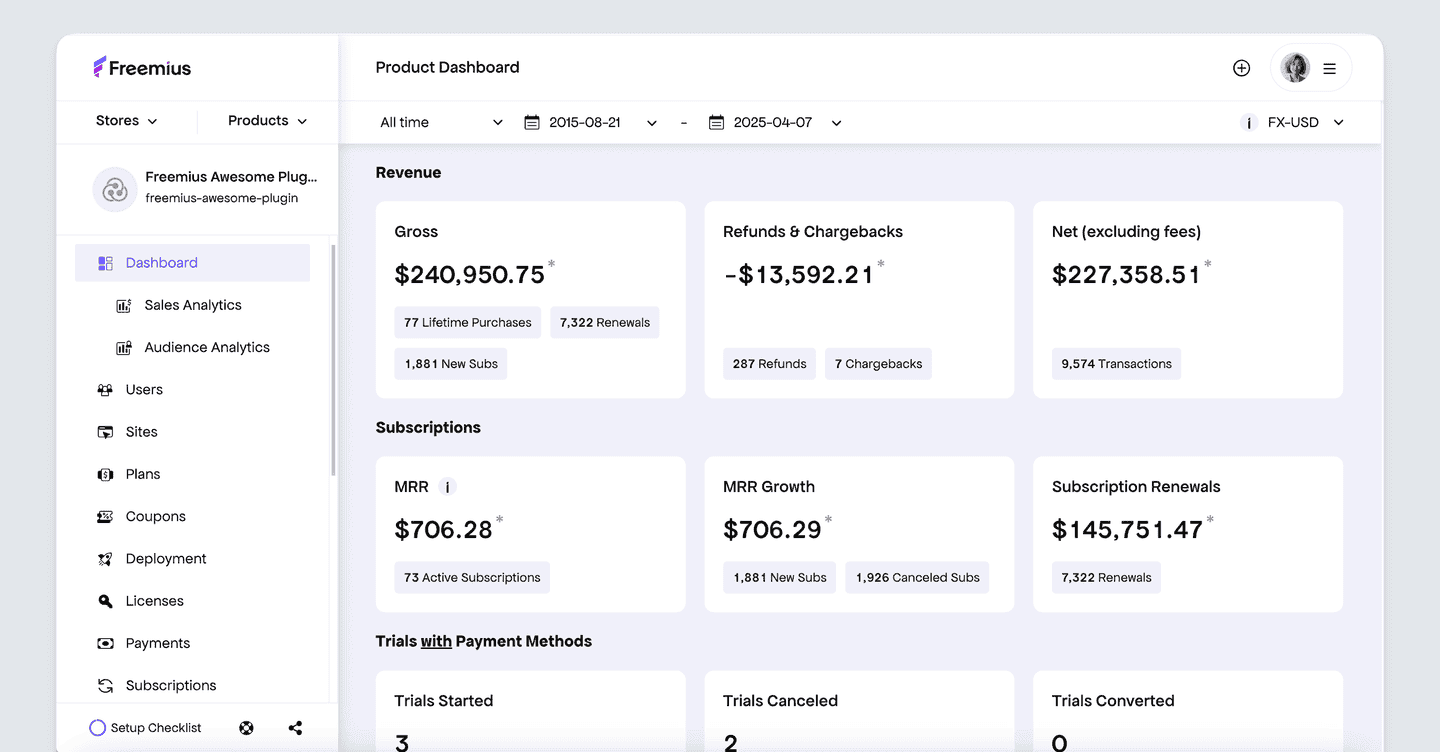
Freemius is the only MoR solution on this list built specifically for software products, combining checkout, subscription billing, an affiliate platform, and growth tools in a single stack.
Best for
- SaaS founders, indie developers, and AI-builders who want to start global selling immediately without upfront costs
- Software businesses that need checkout, billing, licensing, and growth tools in one platform
- Makers who want to sell software globally and avoid future platform migrations as they grow
Key features
- Conversion-optimized checkout: Embeds as an in-page overlay or standalone link, with built-in upsells, coupons, and exit-intent offers. Automatically detects buyer location to display the correct currency and one of several supported languages. Accepts major cards (via Stripe), PayPal, and local payment methods like iDEAL.
- Flexible billing models: Supports one-time purchases, subscriptions, bundles, coupons, free trials, per-seat pricing, and usage tiers (including AI credit models) out of the box. You can experiment with pricing strategies without stitching together multiple tools.
- Native software licensing: Cloud-based license key generation, real-time validation, activation controls, seat management, and revocation — all subscription-aware so renewals and cancellations automatically update access.
- Automated global tax compliance: Calculates, collects, and remits sales tax, VAT, and GST in 100+ countries, including EU VAT OSS, UK VAT, Norway VAT, and US sales tax nexus rules.
- Cart abandonment recovery: A zero-setup, three-email sequence (60 minutes, 24 hours, 3 days after abandonment) plus exit-intent coupons, delivering an average 7.5% revenue lift at no extra cost.
- Built-in affiliate platform: A specialized solution for software products, with referral tracking, commission management, and self-service partner portal, directly integrated with billing and licensing.
- Customer portal: A self-service hub where buyers update payment methods, manage subscriptions, generate EU VAT-compliant invoices, and handle license activations on their own, cutting your support load.
- Developer-ready API and SDKs: Integrate checkout, licensing, and subscription management into your product or mobile apps with documented endpoints and SDKs for popular frameworks.
- Expert support: Direct access to a team that knows the platform at a technical level. Available for integration questions, billing edge cases, and growth-stage decisions.
Pricing
Freemius uses a progressive revenue-share model that aligns with your success:
- 4.7% on your first $50K/month, scaling down to 0.5% on revenue above $100K/month
There are no monthly platform fees and no extra charges for affiliates, dunning, or cart abandonment recovery. The fee applies only to product revenue (taxes are excluded).
Note: Freemius is purpose-built for software products. If you’re selling courses, templates, or non-software digital goods, it’s not the right fit.
Instant account approval, 0% fees for the first three months on new migrations.
Gumroad: For creators selling ebooks, courses, memberships, and downloads
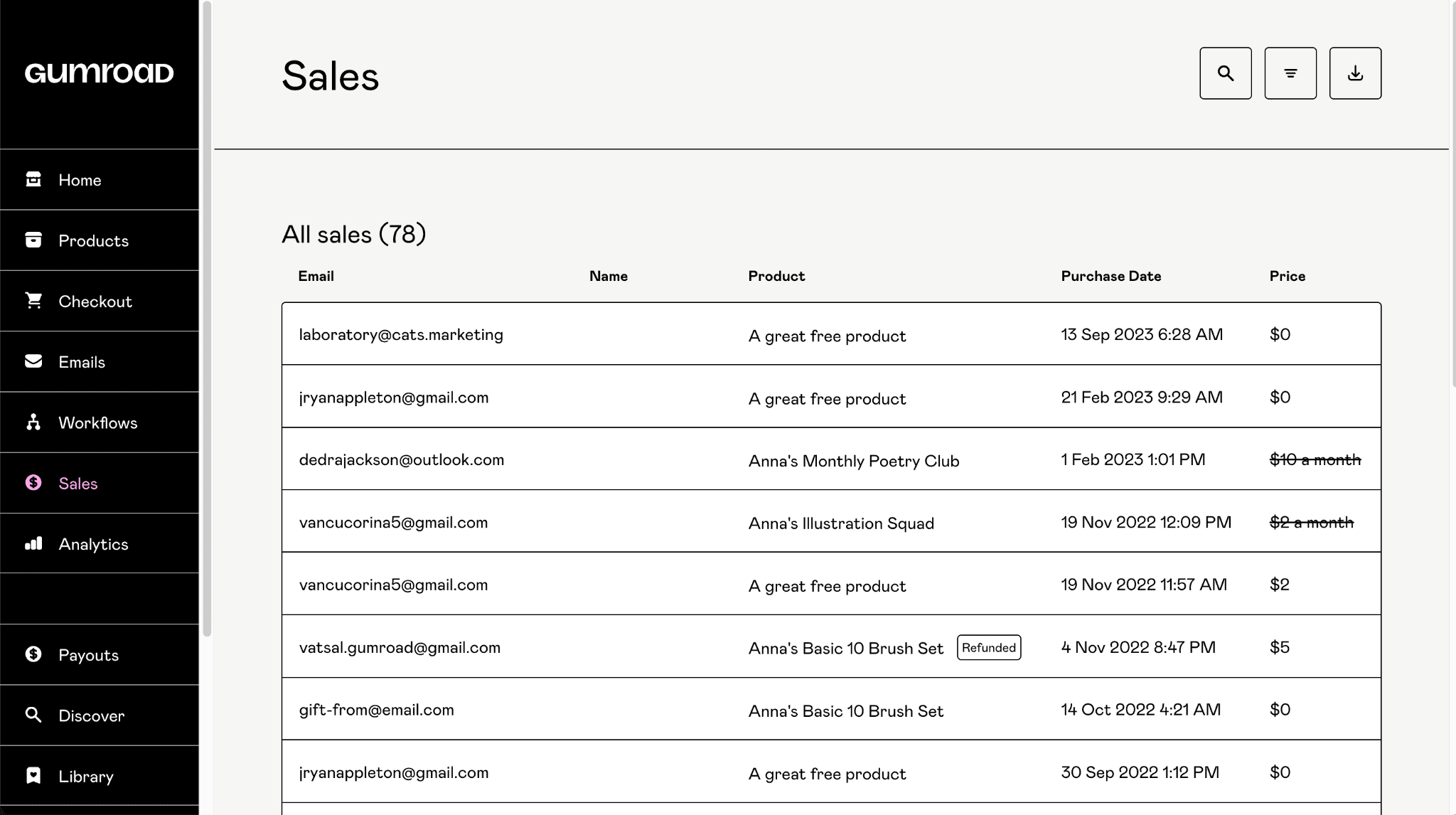
Gumroad is a creator-commerce platform with MoR functionality. It covers a broad range of digital product types and is optimized for simplicity over billing sophistication.
Best for
- Creators selling ebooks, courses, templates, digital art, or membership content
- Anyone who wants to start selling with no technical setup and no vetting process
- Sellers looking for built-in audience discovery through the Gumroad marketplace
Key features
- Gumroad Discover: A built-in creator marketplace where buyers browse and discover products across storefronts, giving sellers organic reach beyond their own audience.
- Pay-what-you-want pricing: Users can allow buyers to choose the amount they pay for their product.
- Flexible product types: Supports digital downloads (PDF, ePub, Mobi, lossless audio), subscriptions, memberships, physical goods, pre-orders, and bundles in a single storefront.
- License key generation: Automatic key delivery after purchase for software products, though without activation controls or subscription-aware revocation.
- Embeddable checkout and follow button: Embed a payment button or follow widget directly on your own site alongside the hosted storefront.
Pricing
- 10% + $0.50 per transaction for direct sales
- Gumroad Discover marketplace sales carry a 30% fee
- No monthly subscription
Possible limitations
- No subscription dunning, failed payment recovery, or cart abandonment tooling
- License key generation is basic (no activation limits, seat management, or subscription-synced revocation)
- No affiliate management built in
- Tax handling via MoR covers EU VAT; US sales tax coverage is more limited at scale compared to software-specific MoRs
- Not designed for SaaS subscription billing (only recurring memberships)
Gumroad works for creators validating a content-based product. For software, the billing and licensing gaps become visible quickly.
Lemon Squeezy: For developers who want API-first checkout with email marketing built in
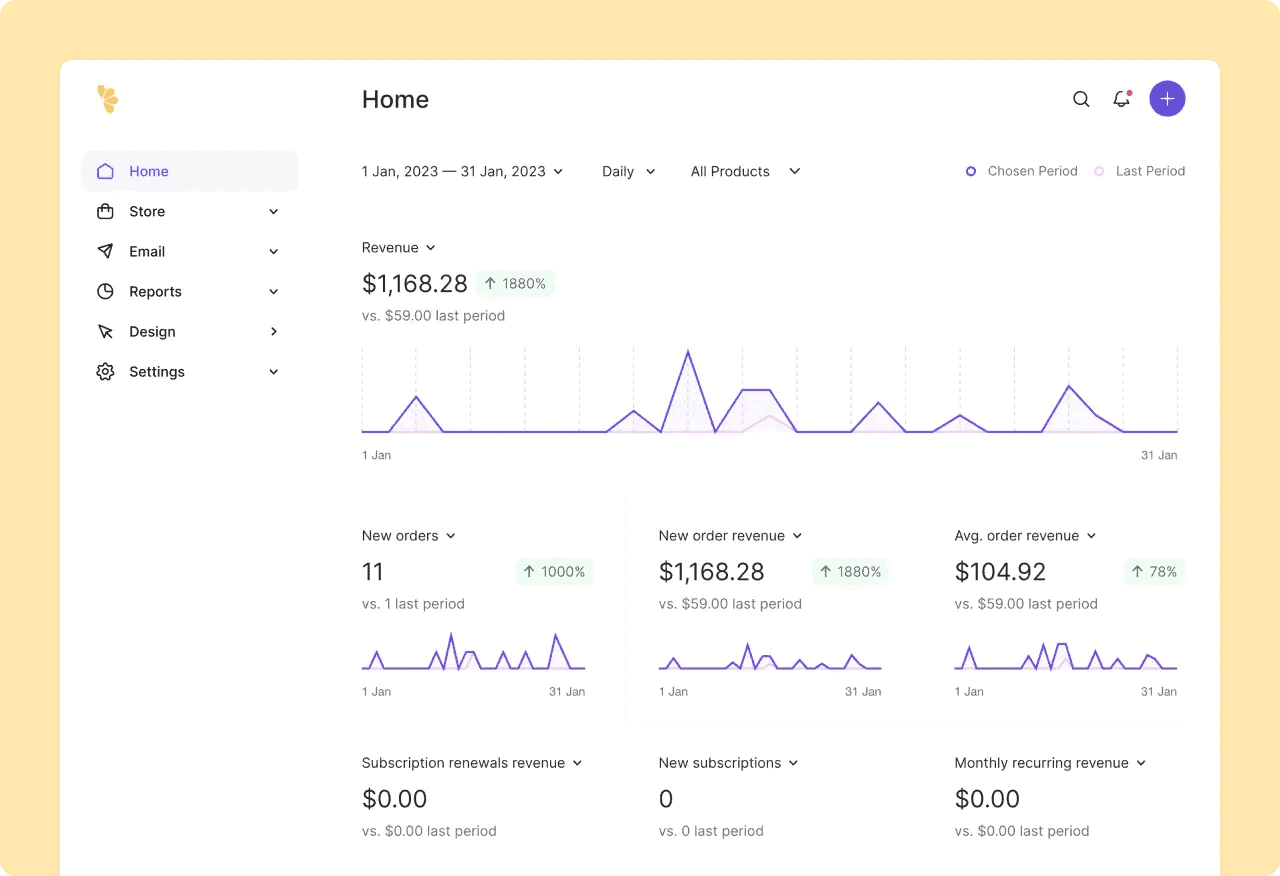
Lemon Squeezy is a merchant of record built for software and digital product sellers with a developer-first API and a clean admin interface. It covers the basics of checkout, subscriptions, and global compliance, with email marketing included.
Best for
- Developers who prefer to control checkout and subscription logic through code rather than a dashboard
- SaaS products with subscription billing and no complex licensing or usage-metering requirements
- Teams that want email marketing bundled into their billing platform to reduce tool count
Key features
- Hosted checkout overlays and checkout links: No-code embeddable checkout plus hosted checkout links.
- Subscription lifecycle management: Upgrades, downgrades, cancellations, pauses, free trials, and discount codes across weekly, monthly, and annual billing cycles.
- Software license key management: Automatic key issuance post-purchase with deactivation and re-issuance controls.
- Usage-based and metered billing: Consumption-based pricing support alongside flat subscriptions, configured via API.
- Built-in email marketing: Integrated email campaigns and list management, free up to 500 subscribers.
- Dunning management: Automated card retry logic and dunning email sequences for failed subscription payments.
Pricing
Advertised at 5% + $0.50 per transaction (charged on gross value), but additional fees apply depending on your payment mix:
- Subscription payments: +0.5%
- PayPal transactions: +1.5%
- International card processing: +1.5%
- Cart abandonment recovery: +5% per recovered payment
- Affiliate platform: +3% merchant fee + 2% affiliate fee
- Payout currency conversion: +2–4%
- Chargeback disputes: $15 per case (Lemon Squeezy auto-refunds, keeps its platform fee, and charges the dispute fee)
Once you’re selling subscriptions internationally and using affiliates, the effective cost can run significantly higher than the base rate.
Possible limitations
- Stripe acquired Lemon Squeezy in 2024 and has since been developing its own “Managed Payments” solution. While Lemon Squeezy continues to operate, the long-term product roadmap is less certain.
- Manual verification required before you can go live, which can delay your launch timeline.
- The compounding fee structure makes it harder to predict your actual costs as transaction volume and payment diversity grow.
- Weaker activation controls and seat management.
When to move on from a startup MoR
Consider upgrading when:
- You’re selling in five or more countries and need deeper localization
- You need advanced revenue analytics beyond basic dashboards
- Your billing model has outgrown flat subscriptions into usage-based pricing, custom contracts, or metered billing
If you start with Freemius, you likely don’t need to migrate — the feature set scales with you. If you start with Gumroad or Lemon Squeezy, growth stage is where the limitations become more apparent.
Best merchant of record providers for growth-stage SaaS
Growth-stage SaaS needs an MoR that handles global tax compliance, payment localization, revenue analytics, failed payment recovery, and subscription lifecycle management.
These providers are built for the problems that come when revenue starts climbing.
Freemius at growth stage: Built-in tools for global growth
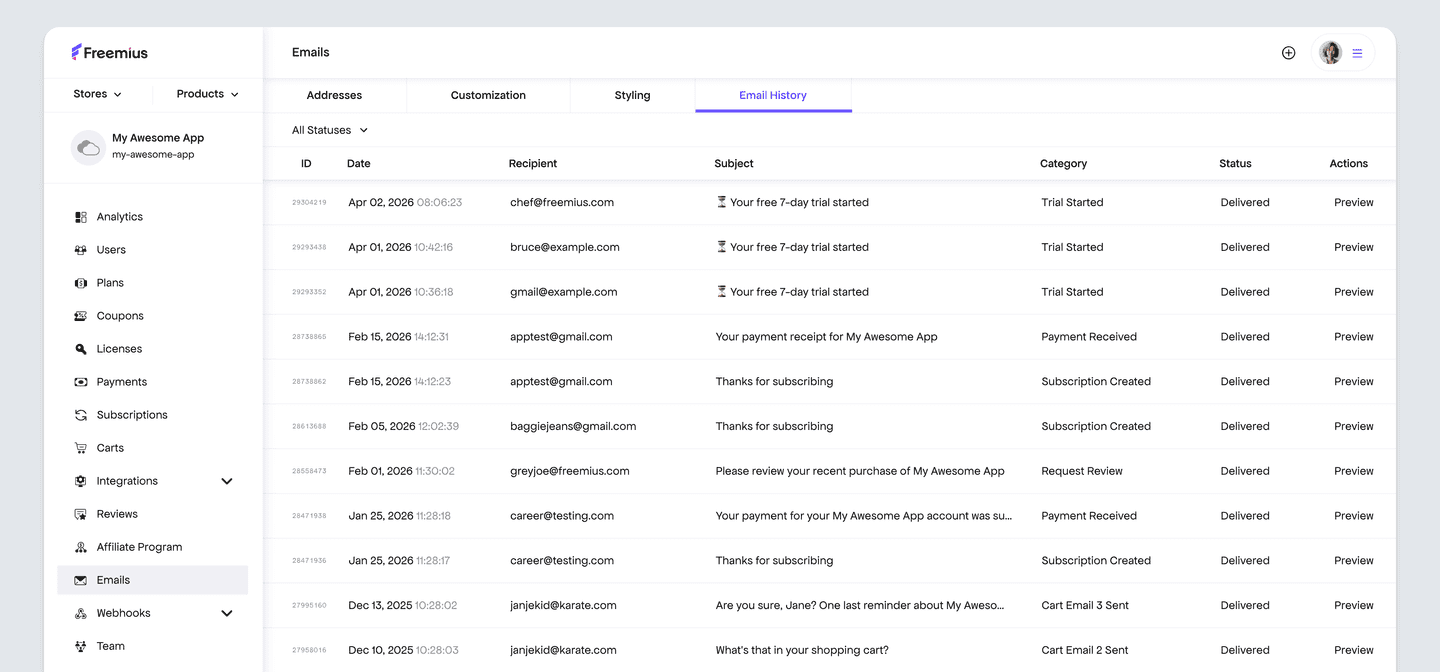
If you started on Freemius at the startup stage, you don’t need to migrate. The same stack scales with you and the growth-specific tools become especially valuable.
What becomes critical at this stage
- Dunning and payment recovery: Automated retry logic and recovery emails for failed renewals protect cash flow and reduce involuntary churn, included at no additional cost.
- Payment and subscription analytics: Track MRR, churn, trial conversions, revenue by country, average order value, and refund rates in real time to identify growth levers and revenue leaks.
- Multi-currency support: Sell to global customers across 100+ countries with consolidated reporting, so international expansion doesn’t mean fragmented data.
- Affiliate platform management: Scale your affiliate channel with automated tracking, commission management, and payouts directly from your dashboard, turning your customer base into a customer acquisition engine.
The pricing advantage compounds at the growth stage: the progressive rate drops as your revenue climbs, so your effective cost decreases the more you sell.
No hidden fees, charges on the tax component, or extra cost for recovery tools that other platforms charge separately for.
Freemius is also worth evaluating at this stage even if you didn’t start here — particularly if you sell software with licensing requirements (activation controls, seat management, subscription-aware revocation) that Paddle and FastSpring don’t handle natively.
Paddle: For self-serve B2C SaaS scaling globally
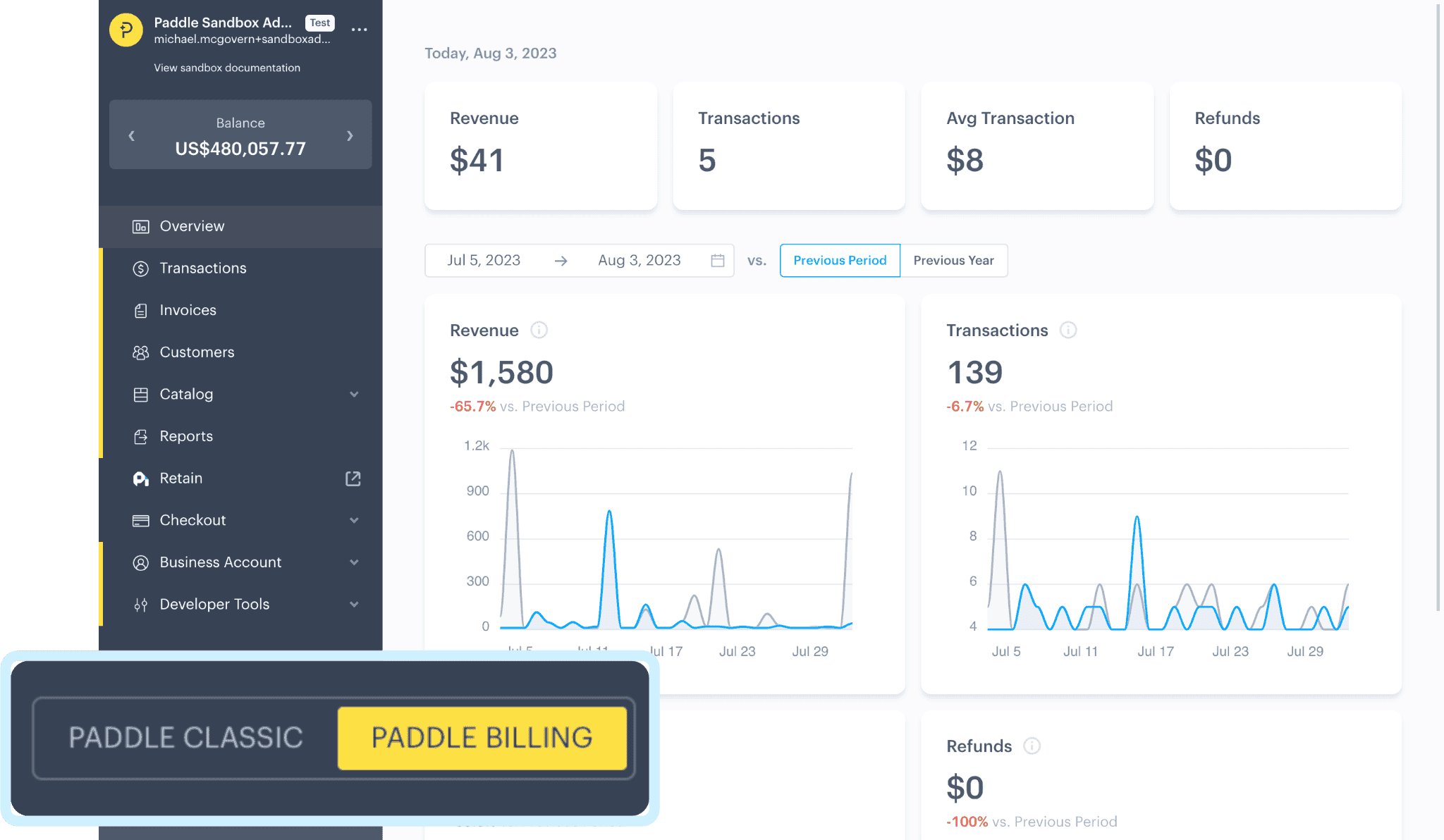 Source: Paddle website
Paddle is the most widely recognized MoR for self-serve B2C SaaS. It handles global tax compliance, subscription billing, and payment localization. Since its ProfitWell acquisition, revenue analytics are built in at no extra cost.
Best for
- B2C SaaS with self-serve subscription models scaling into global markets
- Teams that want built-in retention analytics and pricing optimization
- Developers who value clean API documentation and multiple checkout integration options
Key features
- ProfitWell Metrics: Subscription analytics dashboard covering MRR, churn, LTV, trial conversion, and revenue benchmarks (previously a standalone $0/month tool that required separate setup, now built directly into Paddle).
- Automated failed payment recovery: Smart retry logic for failed card payments with configurable recovery email sequences, reducing involuntary churn.
- Subscription management: Full lifecycle billing including recurring charges, upgrades, downgrades, pauses, and usage-based pricing via API.
- CRM integrations: Native connectors for Salesforce and HubSpot that sync billing data with sales pipelines.
Pricing
- 5% + $0.50 per transaction, with the fee applied to gross revenue including the tax component
Possible limitations
- If you sell desktop software or need activation controls, you’ll need a separate licensing system.
- Requires a 1–6 week KYC review before you can start selling. Operational website, terms of service, and privacy policy are required before your application is reviewed.
- Support response times of 5–14 days have been reported by founders during onboarding and beyond.
- Reports of sudden account closures and fund holds, particularly for indie developers. Paddle has also restricted certain product categories including generative AI tools.
- Limited fit for complex enterprise billing: custom contracts, PO-based purchasing, and quote-to-cash workflows hit constraints at scale.
Paddle is optimized for self-serve SaaS with predictable subscription models. For that use case, it delivers strong value if the approval timeline and no-licensing tradeoff fit your situation.
FastSpring: For digital product businesses that need a full hosted storefront
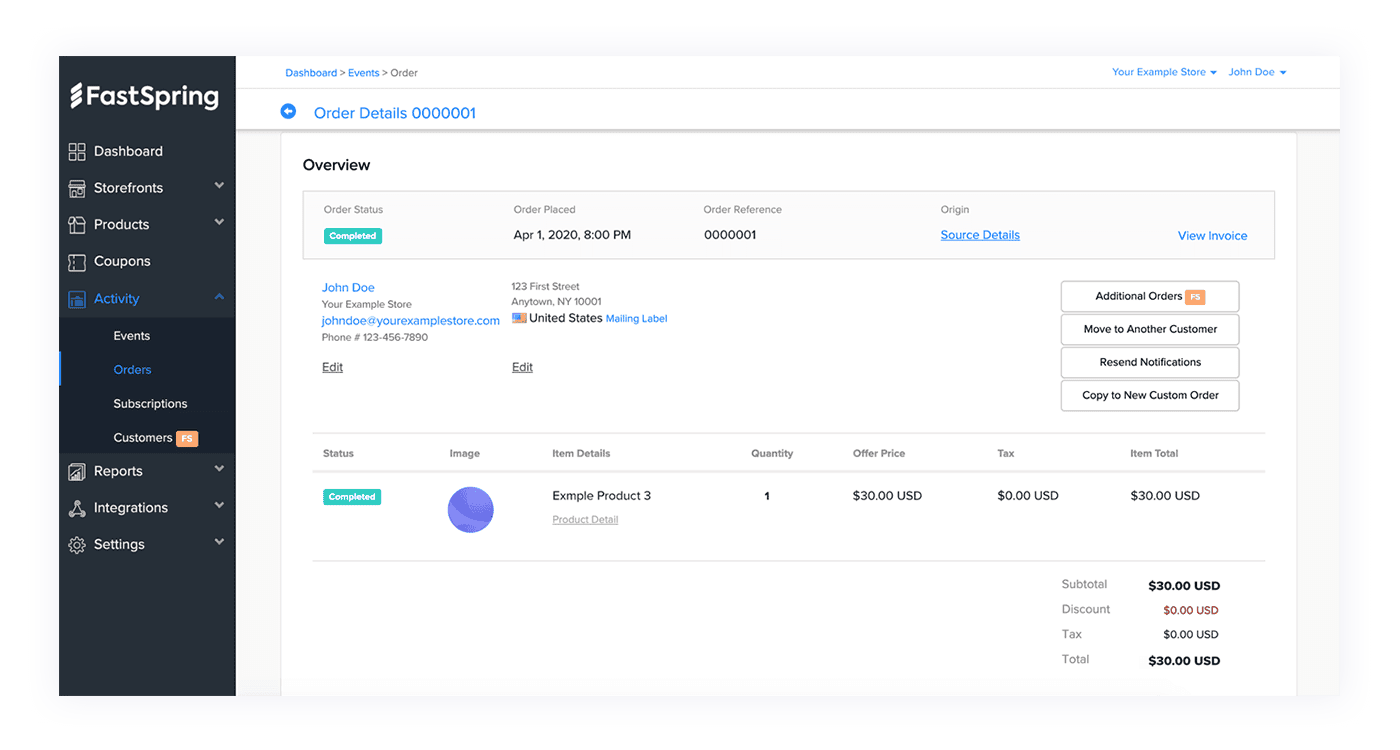
FastSpring is a growth-stage MoR built for companies whose catalog goes beyond software or who need a standalone ecommerce storefront as their primary sales channel rather than an embedded checkout inside their product.
Best for
- Companies selling a mix of software and non-software digital products (utilities, creative assets, plugins, templates) in a single catalog
- Legacy desktop software businesses moving from perpetual licensing toward subscription, who need to support both models simultaneously
- Teams that want a fully hosted storefront as their primary sales channel
Key features
- Hosted storefront with multi-SKU catalog: A fully self-contained store where you manage subscriptions, one-time licenses, bundles, upgrades, and downloadable products across a single catalog. Supports region-specific storefronts per market.
- Configurable checkout: Multiple checkout formats (embedded widgets, popup overlays, and localized hosted storefronts) all customizable and brandable.
- Automated subscription billing: Full lifecycle management with trial periods, renewals, and customizable pricing models alongside one-time purchase support.
- Revenue recovery: Cart abandonment recovery tooling and dunning automation for failed subscription payments.
Pricing
- Custom pricing based on volume and billing complexity
Possible limitations
- Developer experience and documentation are less modern compared to Freemius and Paddle Developers accustomed to clean REST APIs and webhooks will notice the gap
- No native revenue analytics tool
- Dashboard UX shows its age relative to newer platforms
- No software licensing controls (activation limits, seat management, subscription-synced revocation)
FastSpring earns its place when the catalog is broader than software alone, or when a standalone hosted storefront is the sales model rather than an embedded checkout inside a product.
When to move on from a growth MoR
Consider upgrading when:
- You need custom contracts and enterprise procurement support
- Usage-based or metered billing becomes a core requirement
- Your compliance needs demand dedicated account management and bespoke reporting
That’s enterprise territory.
Best merchant of record providers for enterprise-stage SaaS
Enterprise SaaS means custom contracts, complex billing requirements, procurement workflows, and compliance standards that simpler MoRs aren’t designed to handle.
These providers are built for that level of operational complexity.
Cleverbridge: For enterprise B2B software with complex sales and partner channels
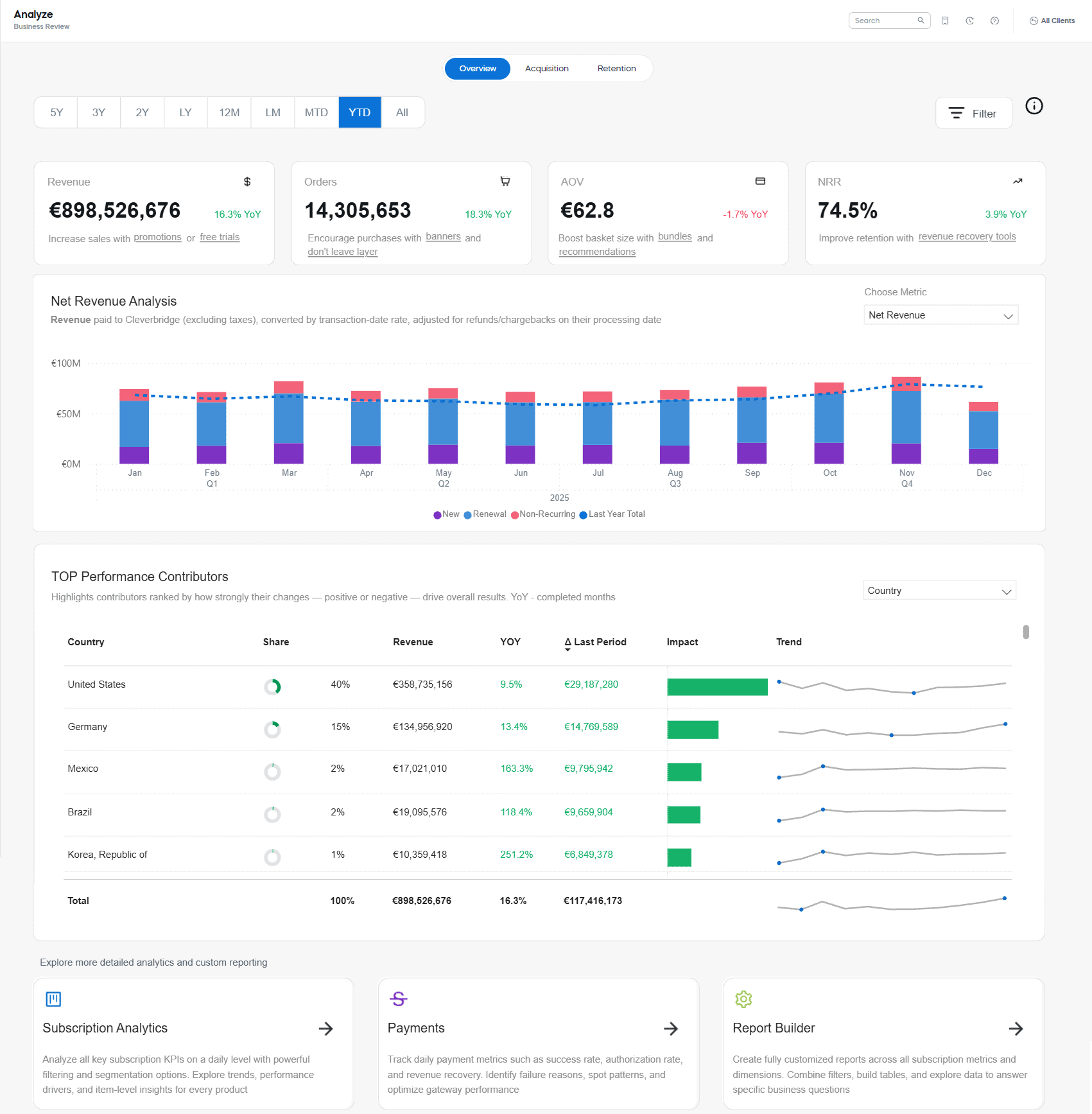
Cleverbridge is built for mid-market and enterprise software companies that need billing flexibility, partner-driven sales, and a dedicated team behind them.
Best for
- Enterprise B2B software companies with negotiated contract structures and procurement-driven buying
- Teams selling through resellers, distributors, or partners who need channel management alongside direct billing
- Organizations that want a dedicated team of ecommerce experts involved throughout the revenue lifecycle
Key features
- Seat-based, usage-based, and hybrid billing: Supports pricing per user, per consumption unit, or a combination of both.
- A/B/C+ testing infrastructure: Allows multivariate experiments on checkout flows, pricing pages, offer structures, and upsell sequences.
- Channel and partner management: Supports selling through resellers, distributors, and referral partners with commission tracking and deal management built in.
- Dedicated account team: 80+ ecommerce experts provide ongoing lifecycle support from initial setup through continuous optimization.
- Three delivery models: Allows choosing between full MoR (Cleverbridge is the legal seller), Managed Service Provider (you hold the customer contracts and payment relationships), or a hybrid of both.
Pricing
- Custom pricing based on contract scope and volume
Possible limitations
- Implementation requires direct team engagement (there’s no self-serve onboarding path)
- Custom pricing means less predictability in cost planning until you’ve negotiated terms
- Overkill for companies that don’t yet need enterprise-level billing complexity
If your sales motion involves negotiated contracts, reseller channels, and enterprise procurement departments, Cleverbridge’s combination of platform and dedicated team is the strongest option in this tier.
2Checkout (Verifone): For enterprise SaaS expanding across global markets
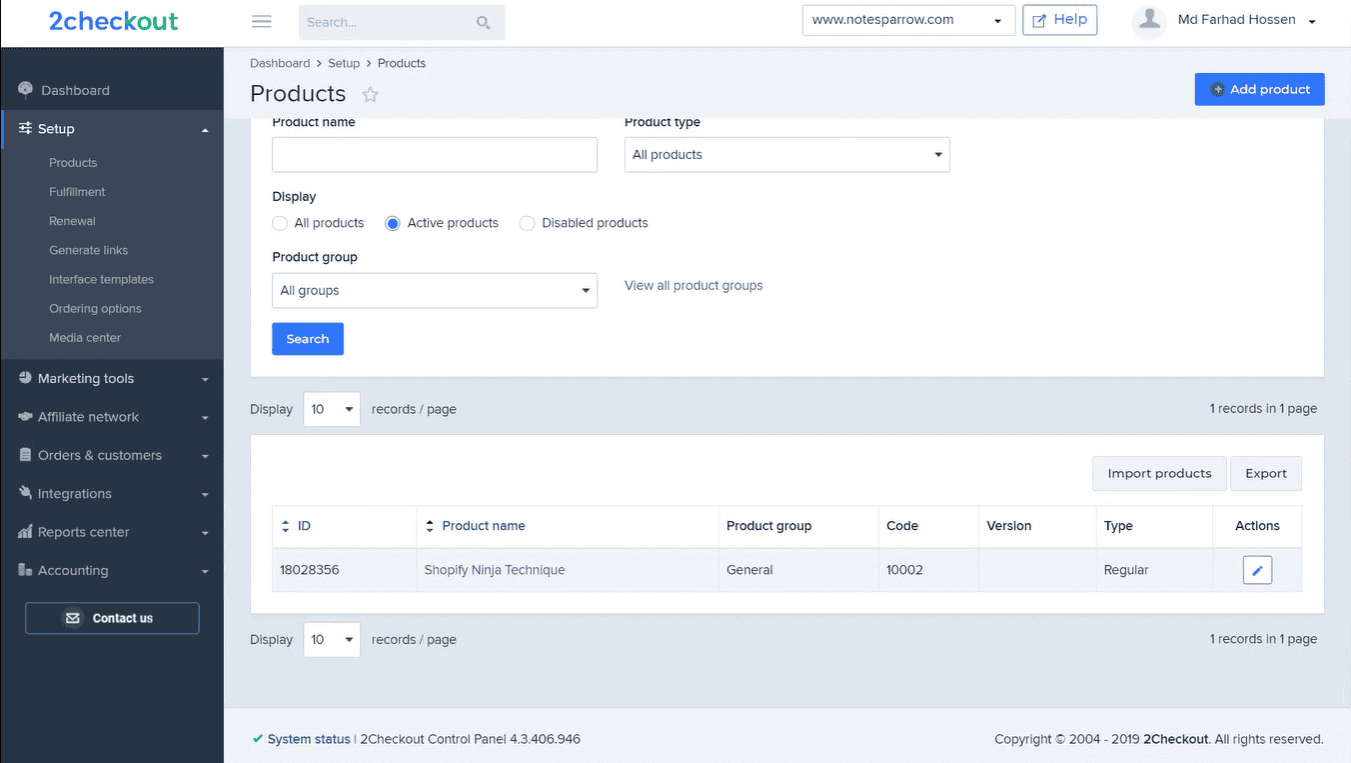
2Checkout, now operating under the Verifone brand, covers more countries and payment methods than any other MoR on this list. For enterprise companies where geographic breadth is the primary requirement, it’s the most complete option.
Best for
- Enterprise companies selling into 200+ countries, including hard-to-reach emerging markets
- SaaS businesses with a broad product catalog needing modular billing architecture (payments only vs. full MoR)
- Teams that need 45+ payment methods and 100+ currencies with built-in conversion optimization tooling
Key features
- Localized checkout in 200+ countries: ConvertPlus and InLine checkout options supporting 30+ languages, 100+ currencies, and 45+ payment methods, including Alipay, Konbini, Boleto, iDEAL, and SEPA Direct Debit.
- Modular plan architecture: Three base tiers (2Sell for payment processing, 2Subscribe for subscription billing, 2Monetize for full MoR) plus add-on modules (2Bill, 2Recover, 2Partner, 2Service).
- AI-based fraud detection and Dynamic 3D-Secure risk filtering: PCI Level 1 compliant. Identifies fraudulent patterns in real time across transactions.
- Subscription lifecycle management: Recurring billing with upgrades, downgrades, cancellations, renewals, and usage-based billing support.
- Conversion and marketing tools: Built-in upsell and cross-sell flows, A/B testing, promotional campaigns, and lead management from the Merchant Control Panel.
- Cart recovery and dunning: Automated recovery for abandoned checkouts and failed subscription payments.
Pricing
- Custom pricing for enterprise terms
Possible limitations
- Platform UX and developer experience are dated compared to Cleverbridge and newer merchant of record providers
- Documentation is inconsistent across product areas, which increases integration effort
- Dedicated account management is less prominent than Cleverbridge’s model — support is more self-serve in practice
For global coverage across markets that other MoRs don’t yet reach, 2Checkout remains the most complete option at enterprise scale.
PayPro Global: For software businesses needing broad global payment coverage and flexible subscriptions
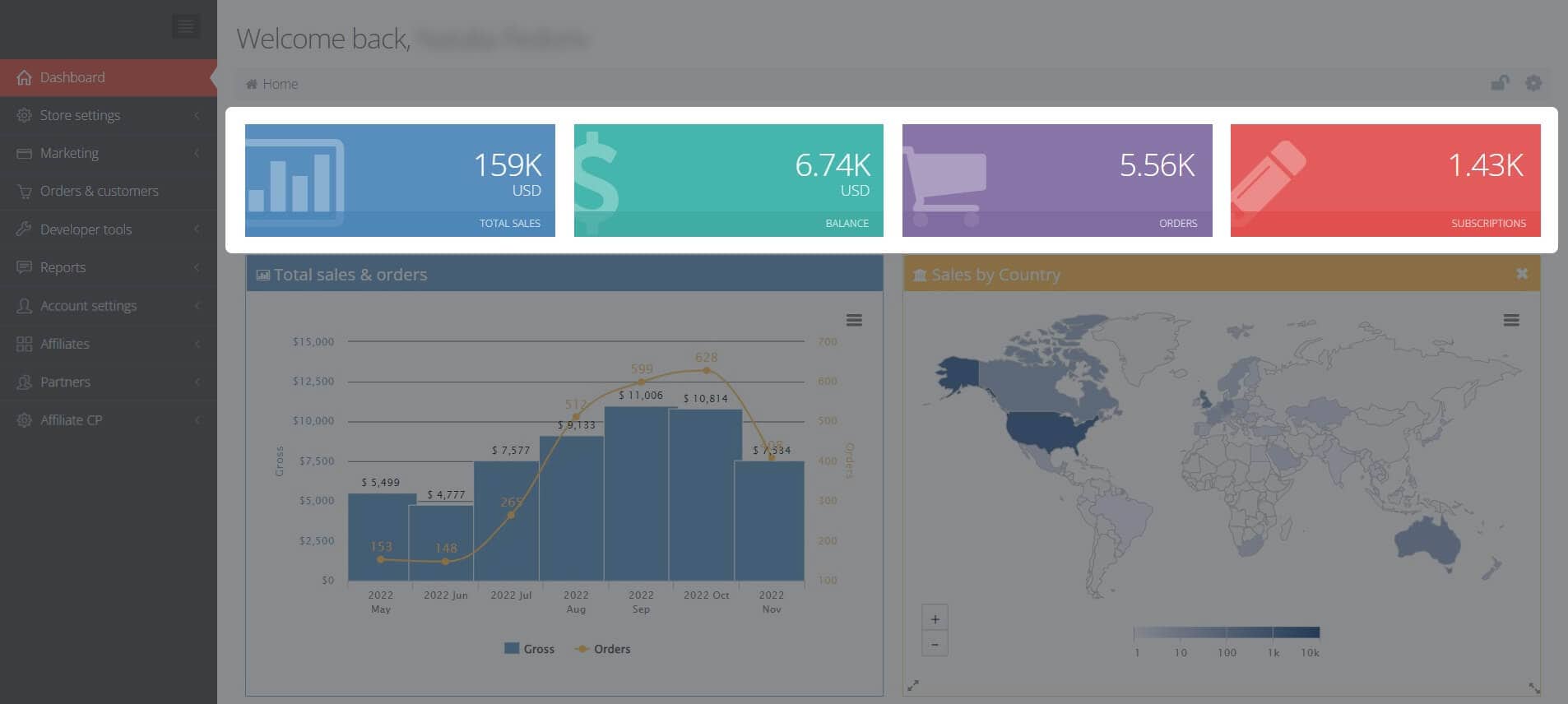
PayPro Global is a merchant of record for SaaS, software, and video game companies that need strong global payment coverage, flexible subscription infrastructure, and a team that handles billing support in local languages.
Best for
- Software companies expanding into global markets who need 70+ payment methods and 140+ currencies out of the box
- SaaS businesses with varied subscription models (flat rate, per-seat, usage-based, or custom enterprise) that need one billing platform to handle all of them
- Teams who want a dedicated multilingual billing support team handling customer payment inquiries on their behalf
Key features
- Subscription lifecycle management for every business model: Flat-rate, per-seat, usage-based, and custom enterprise billing supported in one platform, with full upgrade, downgrade, trial, and failed payment recovery logic.
- Machine learning fraud management: ML-based anomaly detection across transactions, with dedicated multilingual chargeback dispute management.
- Software license key management: Automatic key delivery post-purchase, deactivation controls, and re-issuance.
- Multilingual customer billing support: A dedicated team handles payment issues, refunds, and subscription inquiries from your customers in their local language.
Pricing
- Custom pricing
Possible limitations
- Less enterprise sales infrastructure than Cleverbridge (no equivalent of quote-to-cash, PO-based purchasing, or partner channel management for organizations with procurement-driven buying)
- Weaker conversion optimization tooling than 2Checkout (no native A/B testing, upsell flows, or Merchant Control Panel-level campaign management)
- Sales-led onboarding only
- The configurability that makes it powerful also adds complexity; teams that don’t need regional pricing control will find simpler MoRs faster to adopt
If your enterprise priority is global payment coverage and subscription flexibility rather than enterprise sales process management, PayPro Global competes strongly against both Cleverbridge and 2Checkout.
Key considerations at enterprise stage
At this level, evaluate every MoR on data portability, customer ownership, and contract flexibility. Switching costs are highest at enterprise scale. Make sure you retain ownership of customer relationships and subscription data, and that your contract allows migration if your needs change.
How to decide: A stage-based MoR decision framework for global expansion
Avoid costly migrations by choosing a merchant of record provider that fits your current stage and future growth.
For early-stage software products (startup or early growth):
- Freemius: Manages licensing, checkout, subscriptions, and global tax compliance with no monthly fees and scalable pricing. Avoids future migrations.
For validating non-software digital products (ebook, course, template, membership):
- Gumroad: For fastest checkout setup, zero tech, and marketplace access.
- Lemon Squeezy: For API, subscription management, and email marketing; evaluate international costs.
For scaling software products (growth stage, not yet on Freemius):
- Freemius: For software requiring advanced licensing (activation, seat management, revocation) not offered by Paddle/FastSpring.
- Paddle: For scaling self-serve B2C SaaS without licensing needs, includes ProfitWell analytics.
- FastSpring: For diverse product catalogs (software + digital assets) or traditional hosted storefronts with multi-SKU management.
For enterprise-level operations ($500K+ MRR):
- Cleverbridge: For negotiated contracts, reseller channels, procurement, and dedicated team support.
- 2Checkout: For widest global market coverage and payment method breadth (200+ countries).
- PayPro Global: For strong global payment coverage, flexible subscriptions, and multilingual billing, without full enterprise sales overhead.
The same stage-based logic applies to payment solutions for AI-built apps.
Start selling with Freemius
Every merchant of record provider comes with tradeoffs. Some prioritize speed and simplicity, others are built for complex enterprise setups. The right choice depends on where your SaaS is today and what you actually need it to handle.
If you’re building software and want a merchant of record designed specifically for SaaS — handling checkout, subscriptions, global tax compliance, licensing, affiliates, and retention in one place — Freemius is built for that workflow.
Start selling your software globally with Freemius and handle payments, taxes, and subscriptions without stitching together multiple tools or managing compliance in every market yourself.
FAQ: Best merchant of record providers by SaaS stage
When should I switch from a startup MoR to a growth MoR?
When you’re selling in multiple countries and managing tax compliance manually, or when your billing needs around dunning, analytics, and localization exceed what your current tool provides. If you chose a MoR that scales with you, like Freemius, you may not need to switch at all.
Can I use Stripe instead of a merchant of record?
You can, but you’ll be the legal seller. That means you’re responsible for tax calculation, collection, filing, chargebacks, and compliance in every jurisdiction where you have customers. A MoR absorbs all of that, including PCI DSS liability and dispute management.
What happens to my subscriptions if I switch merchant of record providers?
It depends on the provider. Some support data migration, but most require customers to re-enter payment details. Expect some churn during any migration. This is why choosing a scalable MoR early matters.
Do I need a merchant of record if I only sell in one country?
You still benefit from outsourced tax compliance, fraud protection, and chargeback management. But the ROI grows significantly once you sell internationally, because multi-jurisdiction tax obligations are where complexity compounds. Numeral’s breakdown of sales tax on digital goods shows how varied US state requirements have become.
What’s the difference between a merchant of record and a payment processor?
A payment processor like Stripe routes transactions and handles processing payments. You remain the legal seller. A merchant of record like Freemius becomes the legal seller, taking on responsibility for the entire order process — tax obligations, compliance, financial liability, and liability — on your behalf.
What does it actually cost to expand internationally without a merchant of record?
Local entity creation can cost more than $2 million per market and typically takes over two years to complete. Beyond cost, you’d also need to manage merchant accounts, complete tax registration in each jurisdiction, and stay current on relevant data requirements and local regulations. An MoR lets you reach global customers almost immediately, without that infrastructure overhead.
What are the most common mistakes when choosing a merchant of record solution?
Two pitfalls show up consistently:
- Underestimating the work required to scale with your provider
- Overestimating the hands-on support the MoR will actually provide
Before signing, verify what “support” means in practice — response times, escalation paths, and whether you’ll have a dedicated contact. And choose for where your business will be in two years, not just where it is today.
How does using an MoR speed up time to market in new countries?
Because the MoR owns the tax registration, payment infrastructure, and compliance stack in each market, you can accept international payments without setting up local entities. Global expansion that would otherwise take years becomes operational in days and lets you redirect in-house resources toward product development and customer acquisition instead.