|
|
We all want to grow. New users, new launches, new signups… But when churn creeps past 8% a month, that growth starts slipping through your fingers.
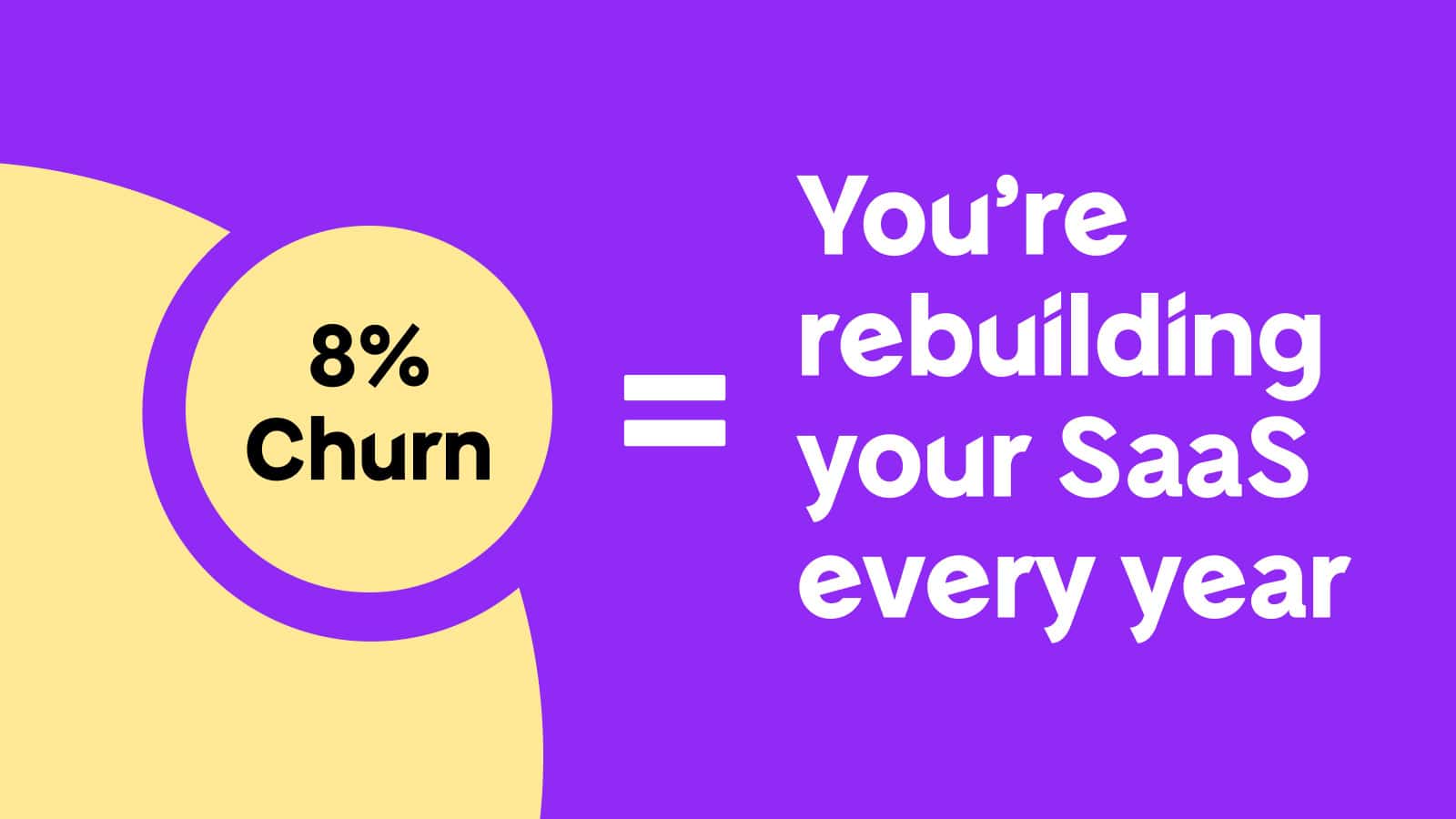
At that rate, you cycle through your entire customer base every year. You keep shipping, promoting, and acquiring, but you’re mostly replacing what you’ve already lost. It looks like progress, yet numbers stay flat.
That’s the real drag of SaaS growth — not lack of demand, but users leaving before they see lasting value. Fix that, and every new customer you win keeps adding to the total.
And you don’t need a full customer success team to pull it off. Just a simple, repeatable system: guide users to value early, keep them engaged, and make it easy to stay.
Because growth counts only when customers stick around.
Why Growth Without Retention Is an Illusion
Still not convinced our math checks out? Let’s run the numbers.
At 8% monthly churn, you’re keeping 92% of customers, which sounds fine until you see how it compounds.
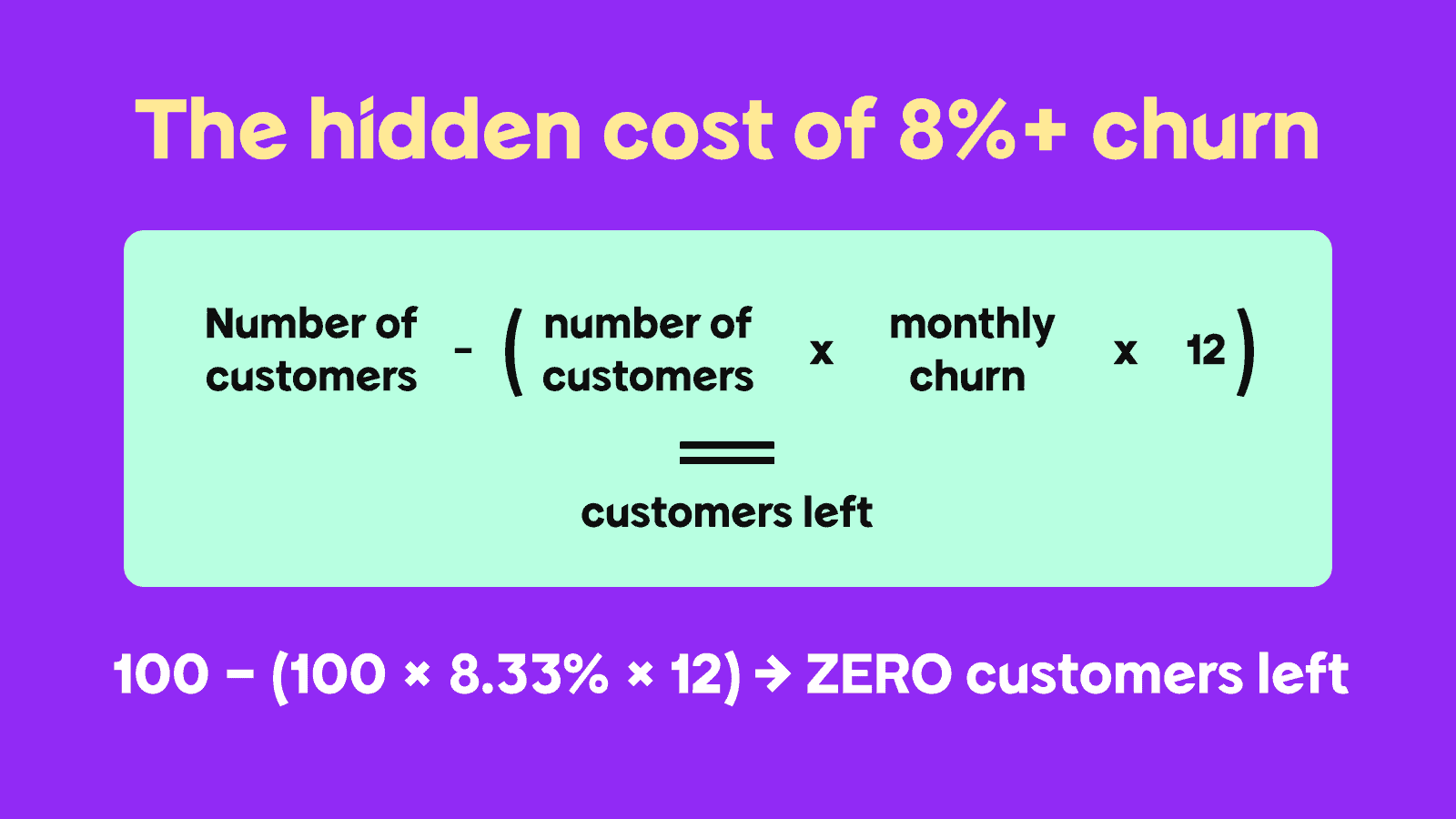
At that rate, you’re not growing — you’re just fighting to win back what you already lost.
For indie SaaS, churn often runs higher than in enterprise products, which makes this tougher. Still, aiming for under 5% a month is a solid, achievable goal.
Before diving in, take a minute to calculate your own churn. Even a rough baseline gives you direction.
Then, start plugging leaks one by one.
5 Practical SaaS Retention Strategies You Can Apply Today
Each move stands alone, but together, they compound into serious retention gains.
Guide New Users to Value, Fast
Most churn happens in the first 30–90 days, not because users dislike your product, but because they never hit that first “a-ha” moment. They sign up, poke around, get distracted, and drift away before realizing how your product actually helps them.

Your mission during that window is to guide them straight to their first success point.
That’s where AlgoCademy, a coding education platform, was falling short: early users were dropping off after a few lessons until founder Mircea Dima discovered the issue was a lack of early guidance.
“Many users told me they didn’t feel smart enough to finish. So, we rebuilt our onboarding to give learners small wins fast. We guide them through the first 20 minutes like a mini victory lap: interactive milestones, a visible progress bar, and contextual hints that make users feel like they’re winning.” — Mircea Dima
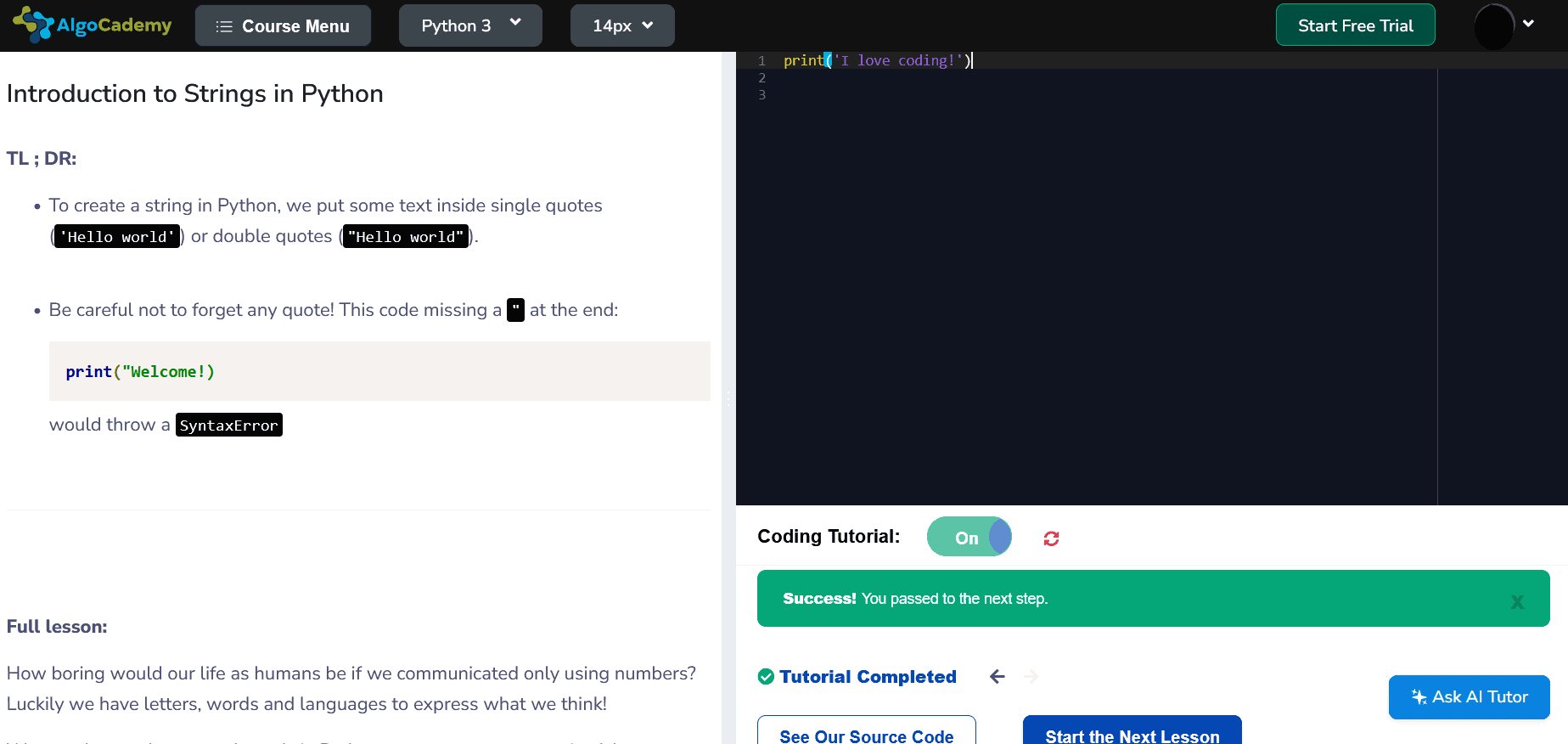
Within two months:
- Activation jumped from 62% to 84%
- Churn dropped to 4.7%
- LTV rose 30%
| Pro tip: Replace long product tours with micro-actions that deliver an instant sense of progress. Use a bar, checklist, or in-app milestones to show progress visually. |
Once users start engaging, pay attention to when logins slow and activity dips.
Spot the Drop-Off, Then Step In With the Right Message
Users rarely cancel overnight. Disengagement starts when they stop logging in, skip a key step, or stall mid-setup. Identify those red flags early and you’ll have time to fix what’s causing them.
Step 1: Watch for Early Signs of Drift
Track usage patterns that signal disengagement before it becomes churn:
- No login for 7+ days
- Setup started but not finished
- No core action by Day 3 (e.g., project created, email sent)
While scaling his real estate business, Erik Wright built LeadFlow Pro to automate lead management and follow-ups. At first, users signed up but stalled during setup (no leads imported or campaign launched) and most went inactive within seven days.
To fix that, Erik added 7-day inactivity alerts that caught drop-offs before they churned.
“If someone hadn’t logged in or triggered a workflow, they’d get a short, personalized check-in referencing what they’d already started. Those timely nudges re-engaged about 18% of inactive users and cut churn nearly in half.” — Erik Wright
Joosep Seitam at Socialplug ran a similar play with 72-hour inactivity alerts and saw churn drop from 9% to 5.8%.
| Pro tip: Every product has its own drift zone. For you, it might be a week of silence; for someone else, just a skipped step. The key is knowing what “normal” engagement looks like, then flagging when it breaks. |
Step 2: Re-Engage With Human, Contextual Outreach
The right message at the right moment can retain a user and surface insights that improve your product.
When Ankush Chowdhury at Humanizer AI saw users ghosting after their first session, he started emailing them personally:
“About 30% replied, many re-engaged right away, and those conversations helped us cut weekly churn from 45% to 15%.” — Ankush Chowdhury
Those conversations did more than bringing users back, they revealed confusion around pricing, missed features, and onboarding gaps. Acting on it made users feel genuinely heard and improved the experience for everyone.
For small SaaS teams, direct outreach goes beyond retention; it’s a way to build community around your product and earn loyalty.
| Pro tip: Don’t wait for feedback to come through forms or surveys. The best insights show up in casual, human conversations that remind users there’s a real person behind the product. |
Step 3: Match Every Message to the User’s Next Move
Your power users don’t need “getting started” tips and new signups don’t need renewal reminders.
Start with four simple segments to help users take the next step:
| Segment | Behavior | Best next message |
| New (≤30 days) | Still finding value | “First win” guide tied to next step (e.g., “Create your first project in under 2 minutes — here’s how.” |
| Maturing (1–3 months) | Using basics, stalling | Nudge toward adjacent features (e.g., “You’ve scheduled a campaign — try automating follow-ups next.) |
| Established | Recently inactive | “Pick up where you left off?” email (e.g., “You started setting up analytics but didn’t finish. Ready to complete it?”) |
| Renewal window | Active, near billing | Value recap + smart plan reminder (e.g., “You’ve run 42 reports this month. Upgrade to keep unlimited access.”) |
Once you’ve covered these basics, go a level deeper by tracking behavioral signals that help you eliminate lingering friction:
- Missed activation moments: Users who didn’t complete a key step (e.g., data import, first report generation) — send a quick, contextual reminder.
- Engagement drop: Notice when activity dips from daily to weekly — re-engage with a “noticed you haven’t been active lately” message and a single next step.
- Support interactions: Follow up personally after frustrating support tickets to close the loop and reinforce trust.
| Pro tip: Before sending any message, ask: “What’s this user trying to do right now and how can I help them succeed?” |
Want to go even deeper? Run a quick cohort analysis to see where engagement starts to fade and which user groups are most at risk.
Drive Feature Adoption
Users churn when they don’t understand how new features fit into their workflow. Show them the “why” behind each update — with context, timing, and proof that it makes their day easier — and adoption (+ retention) will follow.
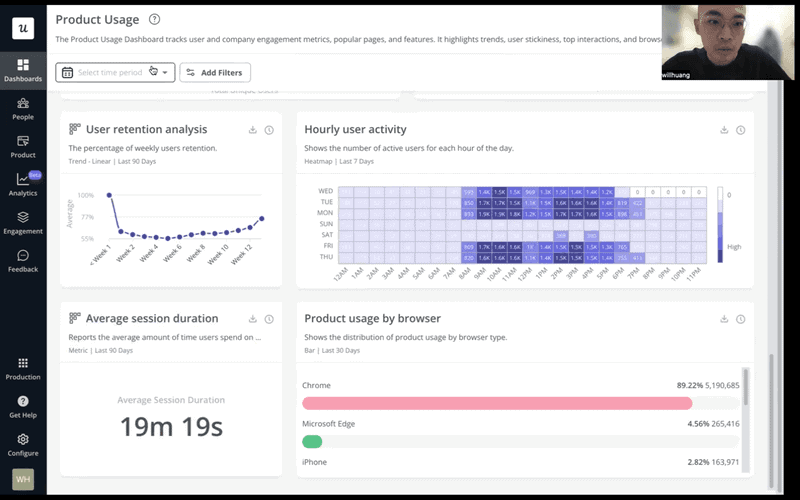
That was the challenge for CYBERBIZ, a Taiwan-based e-commerce platform. After a major admin panel redesign, most merchants kept using familiar tools, ignoring the new ones.
“We realized merchants didn’t see how the updates fit into their daily flow,” says Wei-Di Huang, Senior Product Manager at CYBERBIZ. “So we built short, in-app walkthroughs that showed how each update tied to real results (faster order processing or fewer manual steps). Then we followed up with quick surveys to confirm users actually felt those benefits.”
That feedback loop closed the gap between feature release and real-world use. Support tickets dropped, and merchants began adopting the tools designed to make their businesses more efficient.
Not sure which features make the biggest impact? This guide on strategies to increase software adoption walks you through how small SaaS teams uncover what truly improves retention.
| Pro tip: Track how each feature ties to a user’s outcome, like publishing faster, closing more deals, or spending less time on setup. Retention grows when every update makes your customer’s day shorter, easier, or more successful. |
Fix Involuntary Churn
Involuntary churn can quietly eat up to 9% of your revenue. A card expires, a renewal email goes to spam, a failed charge never retries… These silent payment failures add up fast, ending subscriptions that were never meant to be cancelled.
At FooPlugins, founder Brad Vincent found that simple reminders made a surprising impact:
“Reminder and payment emails were crucial in keeping customers informed about upcoming charges. They not only improved retention and sales but, together with the cart abandonment recovery, noticeably boosted conversions.” — Brad Vincent
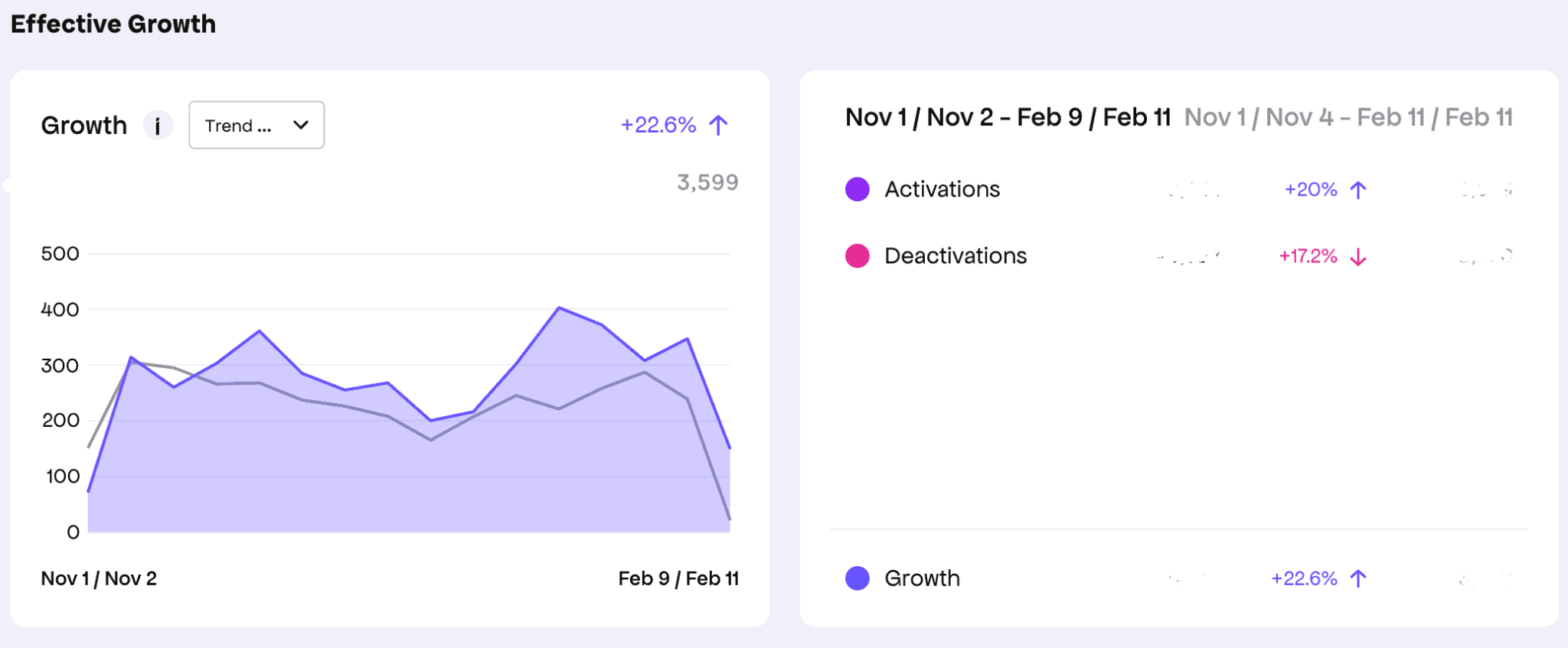
Instead of a manual rescue mission, Brad relied on quiet automation:
Together, these lifted retention and conversion with almost no ongoing effort.
It’s the closest thing to “set it and forget it” retention tactic you’ll get. Before you launch another marketing campaign, make sure you’re not losing customers who meant to stick around.
What about users who want to leave, just not for good?
Offer Pricing Flexibility
Sometimes users hit a rough month, a seasonal lull, or just need a break. A rigid “cancel or nothing” flow turns a temporary dip into permanent churn and forces users out when they’d rather stick around.
When LeadFlow Pro noticed that agency customers kept canceling during low season, they replaced a cold goodbye page with practical alternatives:
- Pause the account (no billing, data preserved)
- Downgrade to a cheaper plan
- Switch to quarterly billing to ease monthly cash flow
About 22% of customers took one of those options and many returned later when business picked up.
Erik thinks it works because:
- A paused user isn’t lost. Their data, setup, and habits are still there
- Reactivating them takes one click, which is far cheaper than reacquisition
- It preserves goodwill (and future referrals) even if they do leave
| Pro tip: Offer downgrade or pause options before users initiate the cancellation. Use usage drops, billing cycles, or feedback triggers to surface flexible options proactively. |
The Retention Multiplier Effect
Improving churn by just a few points can outperform entire marketing campaigns and the gains compound over time.
Let’s run the numbers:
Say you have 500 customers, each paying $19/month — that’s $9,500 in MRR.
Now compare what happens after a year at different churn rates:
| Monthly churn | Formula | Customers after 12 months | MRR retained |
| 8% | 500 − (500 × 8% × 12) | 20 | $380 |
| 5% | 500 − (500 × 5% × 12) | 200 | $3,800 |
That’s 180 more customers and $3,420 in extra monthly revenue (~$41,040 a year) without a single new signup.
Now extend that over 2–3 years, and retention becomes a real growth engine. Customers who stick around spend more, refer others, and create compounding growth you can count on.

Tooling Up for Retention
To put these retention strategies into practice, you need tools that help you see what users are doing, act fast when engagement drops, and close the loop when they leave.
For most indie SaaS founders, that means building a lightweight retention stack with three essentials:
- Behavior tracking to spot who’s active, drifting, or at risk.
- Lifecycle messaging to send the right nudge at the right time.
- Flexible billing and recovery tools to save customers who’d otherwise churn silently.
Platforms like Freemius bundle those capabilities so you don’t have to stitch together five different systems. For example:
- Insights Dashboard: Highlights active, drifting, or dormant users so you can step in before they churn.
- Segments: Automates personalized messages based on real behavior.
- Subscriptions: Lets customers pause or downgrade instead of cancel, and retries failed payments automatically.
- Cart Abandonment Recovery: Wins back users who started checkout but didn’t finish.
- Feedback Forms: Capture honest exit reasons to uncover what to fix next.
Instead of juggling billing tools, churn scripts, and spreadsheets, you get a single source of truth for retention, helping you keep customers, learn from every exit, and build revenue that sticks.
Turn Retention Into Compounding Growth
Every customer you keep today multiplies your revenue tomorrow. It shortens your payback period, boosts LTV, and builds steady, predictable growth you can rely on.
And you don’t need to overhaul your stack to get there.
Start small:
- Run a churn check using your dashboard
- Add a “first win” moment to onboarding
- Set up a quiet drop-off alert for new users
Just one of those moves can stop the leak and spark compounding gains.
Every user you keep makes the next month’s growth easier to predict and build on.
If you’re ready to go deeper, check out our guides on how to reduce churn with contextual discounts, set up a marketing automation strategy, and create educational content around your product features.