|
|
Envato built the default marketplaces for WordPress plugin and theme sellers. Then Shutterstock acquired it, and “default” started feeling a lot less comfortable.
The commissions were already steep. The exclusivity terms already frustrating. But when an acquisition reshapes a platform’s incentives, makers who built their business there start doing the math on what they’re actually giving up (and whether a better model exists).
This guide explores top Envato alternatives for WordPress sellers: competing marketplaces or a direct model where you sell from your site and let a merchant of record (MoR) handle payments, taxes, and compliance.
TL;DR: Envato alternatives for WordPress product sellers
- Since Shutterstock acquired Envato in 2024, WordPress support has been cut — integrations dropped, free themes ended, Elements restructured around AI assets.
- From July 2026, Envato removed the exclusivity tier entirely and moved all authors to a flat 50% fee, eliminating the main incentive that kept serious sellers on the platform.
- When evaluating any alternative, the questions that matter most: do you own the buyer email list, can you control pricing and subscriptions, and who handles tax compliance across jurisdictions.
- Marketplace alternatives like TemplateMonster or Creative Market make sense if you need built-in traffic fast and aren’t yet ready to drive your own (but you’re still building on rented ground).
- Selling direct through a merchant of record gives you full customer ownership, pricing control, and lets the MoR handle payments, licensing, global tax, and subscriptions.
Envato alternatives at a glance
There are two different approaches to leaving Envato:
- Marketplace alternatives: You get built-in traffic and payment processing, but have limited access to buyer data and less control over how you price and package your products.
- Merchant of record: You sell from your own site with full customer ownership. The MoR handles payments, taxes, licensing, and subscriptions.
The difference: marketplaces rent you an audience. A merchant of record lets you own your sales and customer data while handling the operational complexity.
| Platform | Model | Best for | Pricing | Customer ownership | Licensing support |
| Freemius | Merchant of record | Full seller control | 4.7% + 2.3% scaling down to 0.5% + 2.3% for full WP solution | Full ownership | Automated |
| TemplateMonster | Marketplace | WordPress themes | 50%* | Limited | Basic |
| WooCommerce Marketplace | Marketplace | WooCommerce extensions | Varies by deal | Limited | Built-in |
| Creative Market | Marketplace | Design-focused themes | 50% | No | Basic |
| AppSumo | Marketplace | Launch exposure | Varies by deal | No | Basic |
*From July 1, 2026, Envato switched all Market authors to a non-exclusive model with a 50% author fee.
What is Envato and why it matters to WordPress sellers
Envato is a digital asset marketplace empire. For WordPress sellers, it means two platforms:
- ThemeForest (themes, launched 2008)
- CodeCanyon (plugins and scripts, launched 2009)
For over a decade, Envato was the default distribution channel for WordPress products.
With over $1 billion earned by its author community, 2 million customers, and top search rankings for “WordPress theme” and “WordPress plugin” queries, listing on ThemeForest or CodeCanyon offered the fastest path to reaching buyers.
But WordPress is only a small part of what Envato offers. The company operates seven marketplaces for video (VideoHive), audio (AudioJungle), graphics (GraphicRiver), stock photos (PhotoDune), and 3D files (3DOcean), in addition to Envato Elements — an all-you-can-download subscription service launched in 2015.
In May 2024, Shutterstock acquired Envato for $245 million and that’s when things changed for WordPress sellers.
What’s changed at Envato since the Shutterstock acquisition
In his take on the acquisition, former WordPress Evangelist James Giroux noted Envato’s press release didn’t even capitalize the “P” in WordPress.
“Code is not a core strength of Shutterstock. With Envato’s author-focused department already gutted, there are very few voices left in the company who can speak up for WordPress authors. With a new management team taking over, it’s unlikely that the needs of code-based authors and products will be considered.”
Two years later, his prediction of deprioritization came true:
- Aug 2025: Envato stopped supporting integrations for WordPress, Adobe, Canva, and Figma, removing direct access to its content within these creator tools.
- Oct 2025: Envato ended its free WordPress themes program on ThemeForest, saying it was too hard to maintain and didn’t get enough updates or support.
- Feb 2026: Envato Elements reorganized into Core, Plus, and Ultimate plans with AI generation limits, ending the unlimited download model.
Three moves, all pointing in the same direction: less WordPress, more AI creative assets. While CodeCanyon and ThemeForest remain, these moves show the parent company isn’t particularly interested in software products.
Why WordPress plugin and theme sellers are looking beyond Envato
The Shutterstock acquisition raised red flags, but the core problems with selling on Envato existed long before the sale. Here’s what’s been driving the search for other solutions.
Pricing structure
As of July 1, 2026, Envato eliminated the exclusivity tier entirely and moved all Market authors to a flat 50% author fee. Previously, exclusive authors could scale up to 70% per sale as their volume grew — in exchange for selling nowhere else.
That ceiling is gone now, and sellers who had earned their way to higher rates through years of volume find themselves earning less with nothing removed in return.
No customer ownership or email list
Here’s the crucial issue: you can’t contact your own buyers directly. Envato owns the customer relationship, which means you’re building on rented land.
When you want to announce a new product, invite users to subscribe to updates, or notify users about a security patch, you’re dependent on Envato’s channels rather than your own.
Limited pricing subscription control
Envato dictates pricing structures and license types. You can’t easily offer custom tiers, volume discounts for agencies, or recurring subscription models on your own terms.
This rigidity becomes a real constraint as your product matures and your users’ needs diversify.
Slow support and marketplace saturation
Review queues can stretch for weeks. Customer support response times are slow, and you’re up against thousands of other sellers for attention.
What to look for in an Envato alternative
Before jumping to a specific Envato alternative, it helps to establish what actually matters for your situation. The following criteria apply whether you’re evaluating another marketplace or considering a completely different selling model.
Audience reach and traffic quality
Raw traffic numbers don’t tell the whole story. A smaller audience of WordPress-focused buyers often converts better than massive general traffic and the gap shows up in revenue.
James Kemp, founder of IconicWP, had reached CodeCanyon Elite Author status and still couldn’t grow past $3,000–$4,000 a month.
“While this was good for a side income, I wanted to focus on Iconic full time, so I needed to grow it. After only a few months, my NET revenues from Freemius surpassed what I’d been making on CodeCanyon, and in less than a year I’d doubled them.”
Consider whether the platform’s traffic matches your buyers, or its just numbers.
Pricing flexibility
Compare the full picture: flat fees vs. percentage cuts, payment processing costs, and whether you can set your own prices. Some marketplaces might offer better rates but restrict how you package and price your products.
Abdelfatah Aboelghit, creator of WooCommerce Builder for Divi, had been selling his plugin at a price he’d set himself — and leaving money on the table without knowing it.
“After moving to Freemius, I finally had the flexibility to rework my pricing with CEO Vova Feldman. Revenue jumped 57% in the first month.”
Before committing to a platform, check whether it gives you real room to test pricing — tiers, bundles, and discounts included.
Buyer data and contact rights
This one matters more than many sellers initially realize. Direct access to buyer emails means you can build direct relationships, market new products, and run renewal campaigns, re-engagement sequences, and cross-sells to your existing base.
Aravind Ajith, founder of Awsm Digital Innovations had over 1,500 Pro users on CodeCanyon when they decided to leave. To transfer licenses, every existing customer had to manually retrieve their Envato purchase code and submit it to get a new key.
“We could have handled the process even more seamlessly if Envato had given us access to the list of our customers — which is one of the main reasons we migrated.”
Ask yourself: If this platform disappeared tomorrow, would you still have a business?
Built-in licensing and subscription support
WordPress products typically require license key management, activation limits, and renewal handling. Evaluate whether platforms handle software licensing for WordPress plugins and themes automatically or leave you building custom solutions.
Bruno Carreço, a self-employed developer behind Go Fetch Jobs, used to run his sales through a separate payment processor — buy on an external site, get redirected to PayPal, come back, download, install, activate.
After moving to an integrated setup, that entire sequence collapsed into one.
“Having it all handled inside the plugin simplifies the whole upgrade process for the customer. Add that to the fact that I can just focus on developing the plugin without needing to create custom code to manage licenses, and other related stuff, it simplifies my life, as well.”
Subscription billing adds another layer: proration, failed payment recovery, and plan changes all require infrastructure that’s either built-in or bolted on.
Tax, VAT, and compliance handling
Selling globally means dealing with EU/UK VAT, and US sales tax across multiple states. According to Shutterstock’s investor materials, over 30 countries have introduced digital services taxes, each with complex requirements. This complexity catches many sellers off guard.
“As an EU Company, you have to collect the VAT ID and make sure it is valid. It’s a difficult process and even if you would have everything in place there is always a risk that your data will not be accepted if you get a tax audit. All of this headache is gone after moving to Freemius and our accountant loves the decision. We are all very happy to only have one invoice instead of hundreds of invoices from $8 buyers.” — Sven Lehnert, CEO of ThemeKraft
Learn how EU VAT and UK VAT compliance and US sales tax works for software sellers.
Analytics, affiliate, and marketing tools
Platforms that support WordPress developers should provide marketing support, including exposure through email newsletters or social media ads, to enhance product visibility. Consider what’s built-in vs. what requires third-party integrations: sales analytics, affiliate program management, cart abandonment recovery, and promotional capabilities.
Best Envato alternatives for WordPress plugin and theme sellers
Let’s break down each option in detail, starting with the merchant of record approach, then moving to marketplaces.
Freemius (merchant of record)
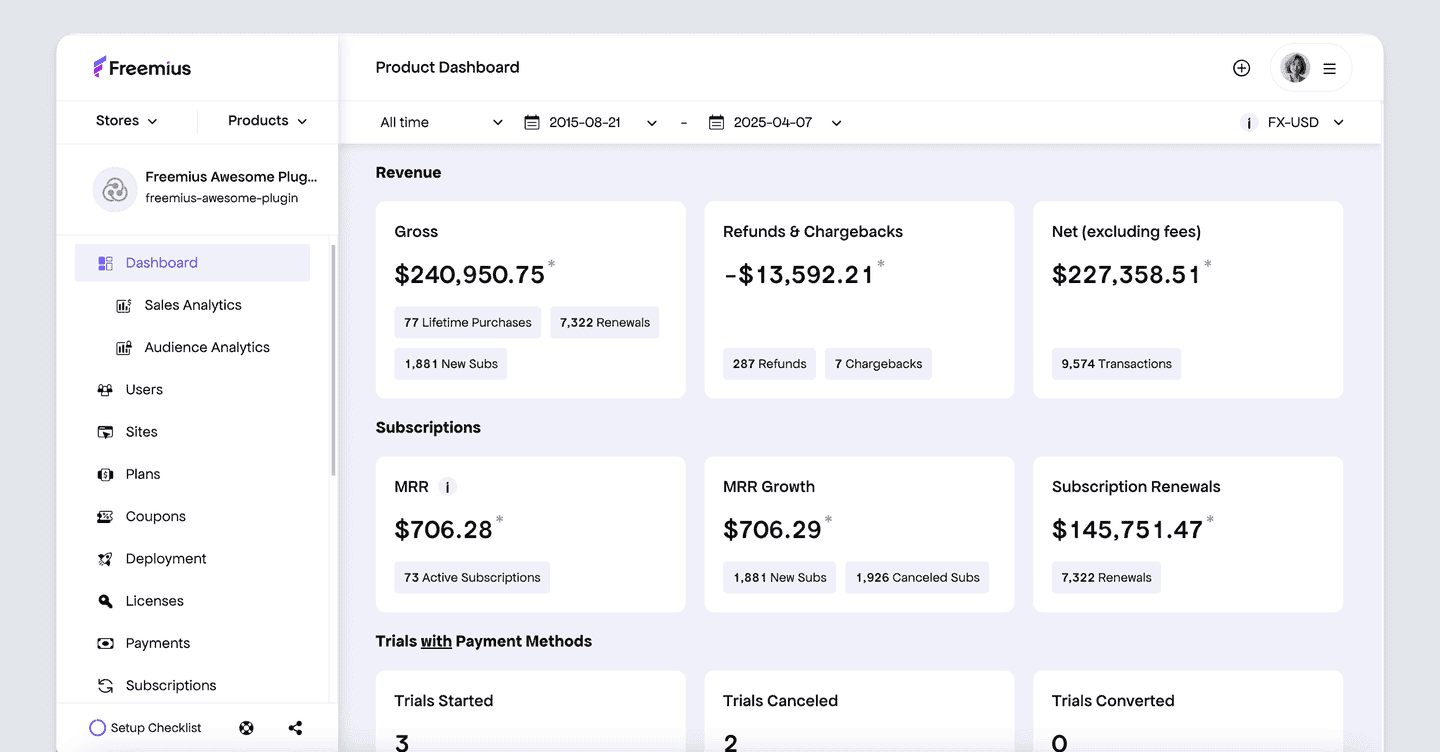
Freemius operates as a merchant of record built specifically for software including SaaS, AI-built apps, and WordPress plugins and themes.
Unlike the marketplaces below, you sell directly from your own site. Freemius handles the operational stack: payments, global tax compliance, licensing, subscriptions, and marketing automation.
Key features
- Checkout: Process payments via Stripe, PayPal, and iDEAL in multiple currencies. Deploy as an embeddable overlay or link, featuring built-in upsells, coupons, and exit-intent offers. Automatically detects buyer location to display one of several supported languages.
- Software licensing: Manage activation limits, feature gates, and trial rules from your dashboard.
- Subscriptions: Handle trials (with/without payment), upgrades, downgrades, proration, annual billing, pauses, and automated failed payment retries.
- Cart abandonment recovery: Automate cart abandonment recovery emails (at 60 mins, 24 hrs, and 3 days).
- Payment analytics: Track net revenue, MRR, churn, trial-to-paid conversion, and revenue by country in real-time. Filter by plan, cycle, license, seats, and currency.
- Global tax compliance: Automate calculation, collection, and remittance of VAT, GST, and US sales tax.
- Customer portal: Empower buyers to independently manage licenses, invoices, and payment details.
- Affiliate platform: Track referrals, manage commissions, and automate payouts without extra fees.
- Expert support: Get dedicated assistance from the Freemius team to help you optimize your selling strategy and resolve technical issues.
- Community: Join an invite-only Slack community of thousands of software makers to share pricing strategies, launch feedback, and growth advice.
What you control
- Pricing plans and license tiers
- Discount strategies and promotional campaigns
- Product positioning and branding
- Checkout experience on your own domain
Possible limitations
- Requires you to drive your own traffic (no built-in marketplace discoverability)
- You’re responsible for your own marketing and customer acquisition
Pricing
Freemius uses a progressive revenue share model, meaning fees decrease as you grow. For full WordPress solution, this is what it looks like:
| Monthly gross | Fee |
| $0–$50,000 | 7% |
| $50,001–$60,000 | 6.8% |
| $60,001–$70,000 | 6.3% |
| $70,001–$80,000 | 5.3% |
| $80,001–$90,000 | 4.3% |
| $90,001–$100,000 | 3.3% |
| Over $100,000 | 2.8% |
Includes all infrastructure: payments, taxes, licensing, subscriptions, affiliates. Gateway fees (~3.5%) are separate.
You retain full customer ownership, set your own pricing and license structures, and access complete buyer data for direct marketing. The rev-share model aligns with your growth rather than extracting fixed percentages regardless of value delivered.
For WordPress sellers building for long-term success rather than chasing quick marketplace traffic, the MoR model removes dependency while automating the technical infrastructure most sellers don’t want to build themselves.
Instant account approval, 0% fees for the first three months on new migrations.
Marketplace alternatives
The following options operate as traditional marketplaces where you list products alongside other sellers. Each offers different audiences and pricing structures, but all share the fundamental marketplace model: platform-owned traffic in exchange for limited customer ownership.
TemplateMonster
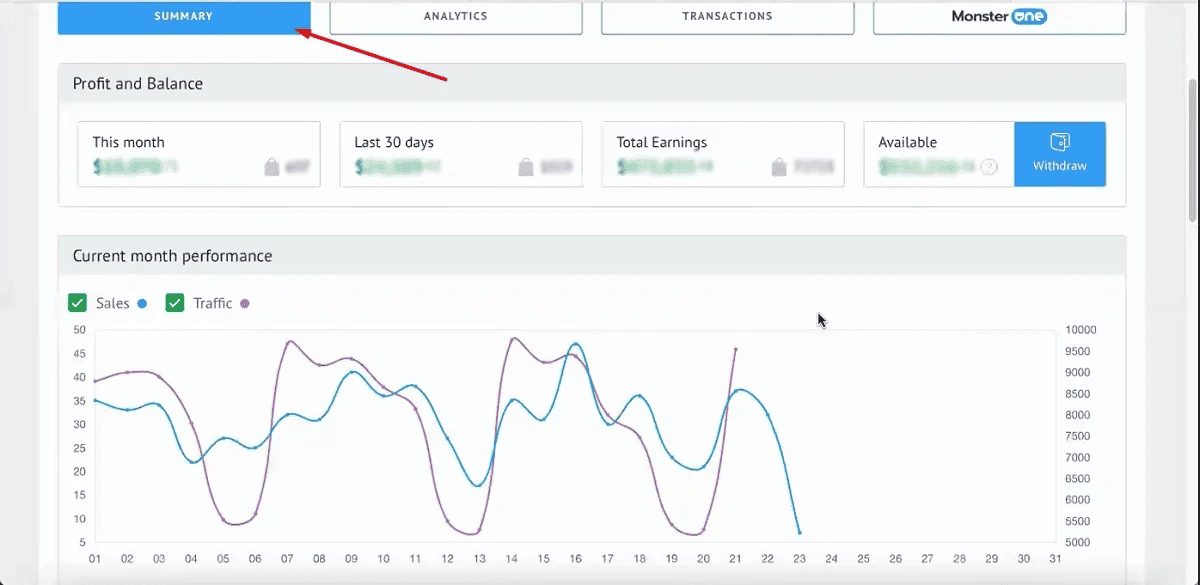
TemplateMonster focuses heavily on WordPress themes and templates, with a substantial audience of buyers specifically looking for WordPress products. The commission structure typically leaves sellers with 40%–65% of each sale depending on exclusivity status.
Pros
- Dedicated WordPress buyer audience
- Optional Product Booster for better rankings (10%–25% additional fee)
- Built-in payment processing
Cons
- No native license key management (you’ll need to integrate your own system)
- Limited data visibility (marketplace owns the relationship)
- No built-in subscription billing for renewals
- Basic tax handling only
It offers decent visibility for WordPress products, though customer relationship ownership remains limited. It’s a reasonable ThemeForest alternative if marketplace reach is your primary concern.
Our full TemplateMonster breakdown offers insights from actual authors.
WooCommerce Marketplace
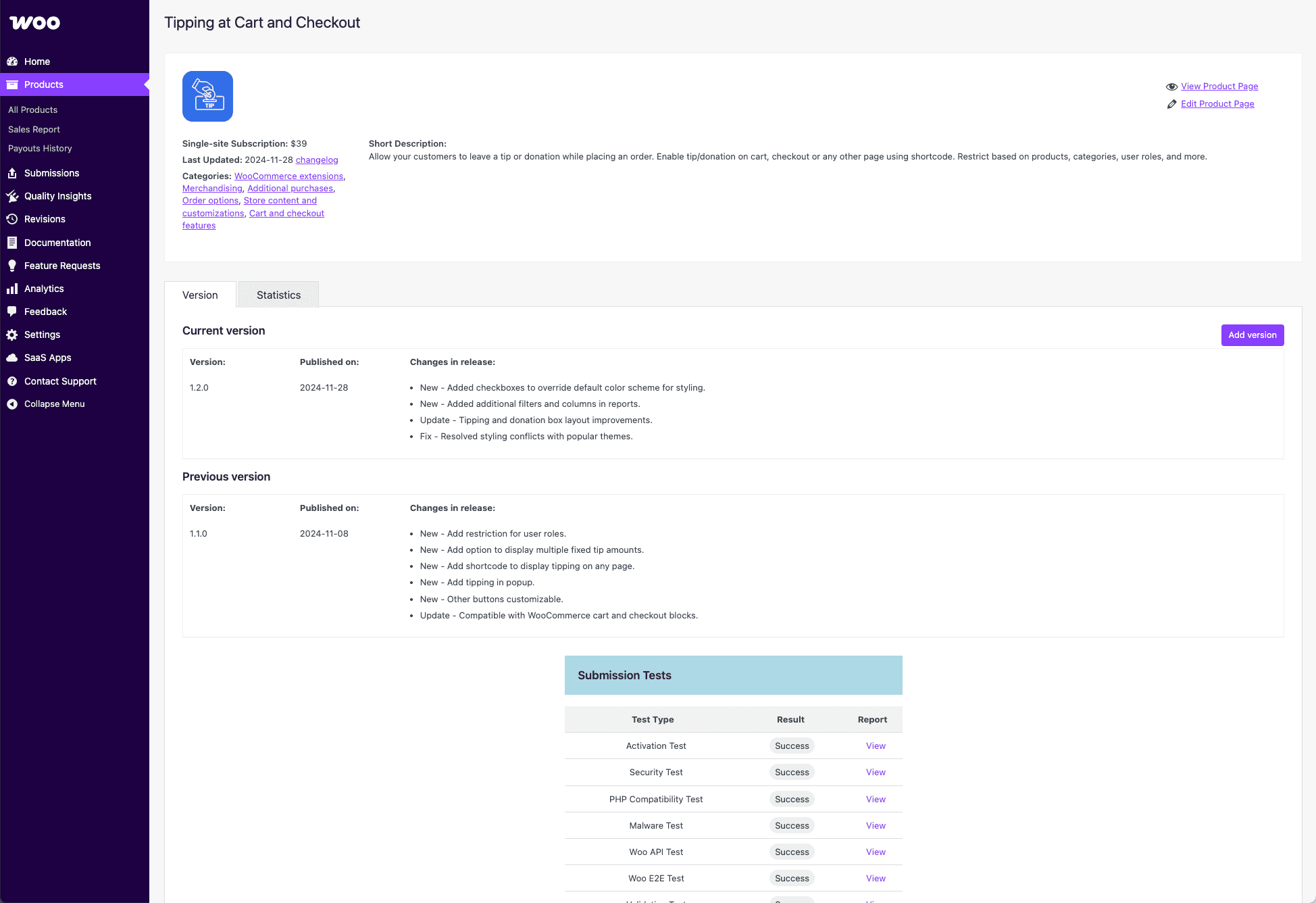
The official WooCommerce extensions marketplace provides direct access to WooCommerce users — a highly targeted audience. However, the approval process is strict, and it requires exclusivity for listed products.
Pros
- Highly qualified buyer audience (WooCommerce store owners)
- Built-in license activation and updates system
- Integration with WooCommerce.com infrastructure
- Strong brand association with WooCommerce
Cons
- Exclusivity requirement limits your distribution options
- No direct contact (all communication goes through WooCommerce)
- Limited control over pricing and discounting
- Revenue share structure varies by product category
- Subscription billing available but controlled by the platform
Revenue share terms and quality requirements make this a selective option, best suited for products that integrate deeply with WooCommerce core functionality and where the audience fit justifies exclusivity.
For a full analysis, see our WooCommerce Marketplace breakdown.
Creative Market
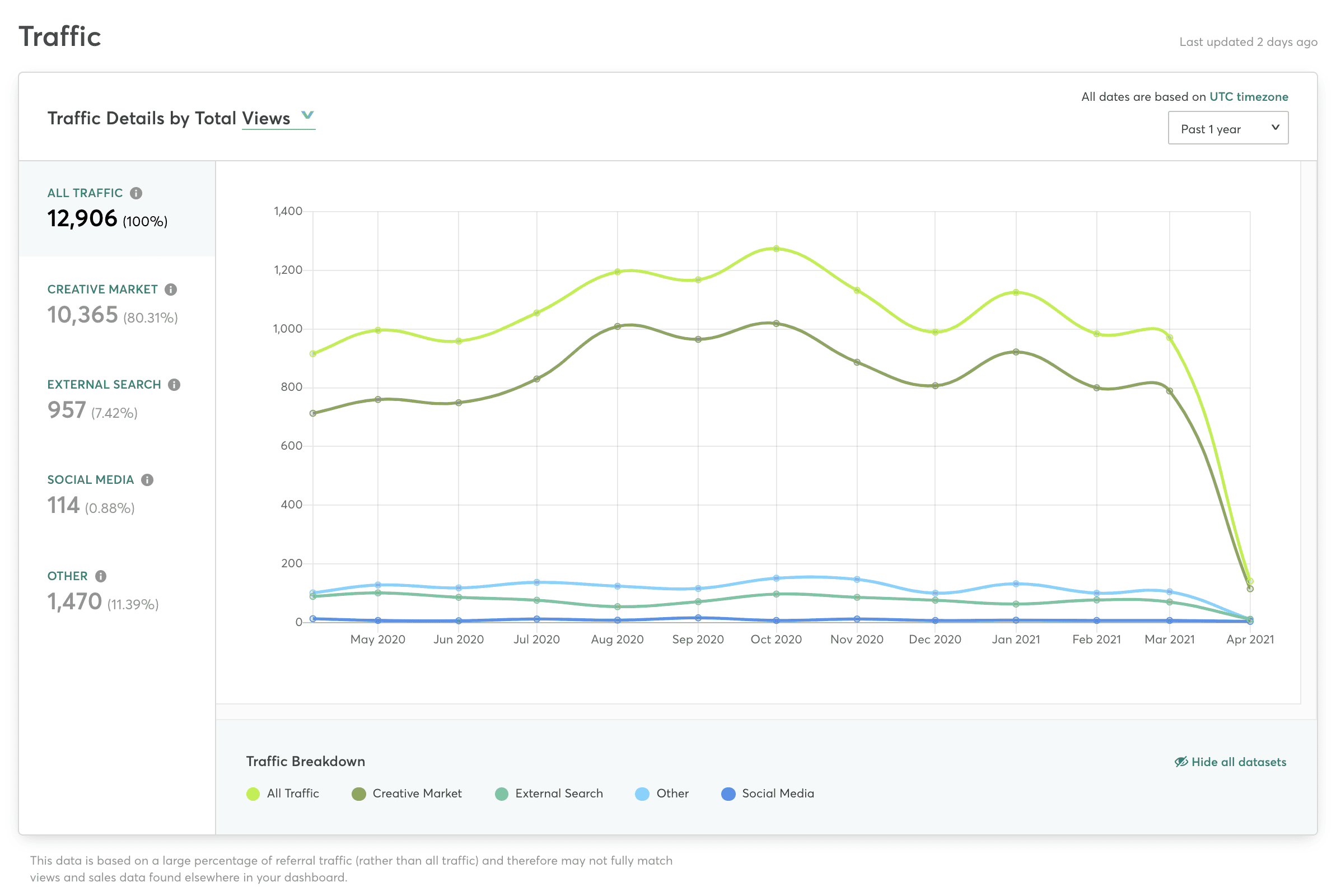
Creative Market attracts a design-focused audience, with a WordPress themes section that draws buyers interested in aesthetics.
Pros
- Customer email list for direct communication
- More flexible pricing control
- Curated marketplace with quality standards
Cons
- No built-in license key system (you manage this separately)
- No subscription billing infrastructure
- Smaller WordPress-specific audience than ThemeForest
- Limited software-specific features (built for digital assets, not code)
- You handle all tax compliance yourself
The WordPress-specific audience is smaller than Envato’s, but the platform’s reputation can work in your favor if your products fit the design-forward positioning and you’re prepared to handle licensing infrastructure separately.
Our full breakdown of Creative Market for WordPress sellers covers the economics, including three expert perspectives.
AppSumo
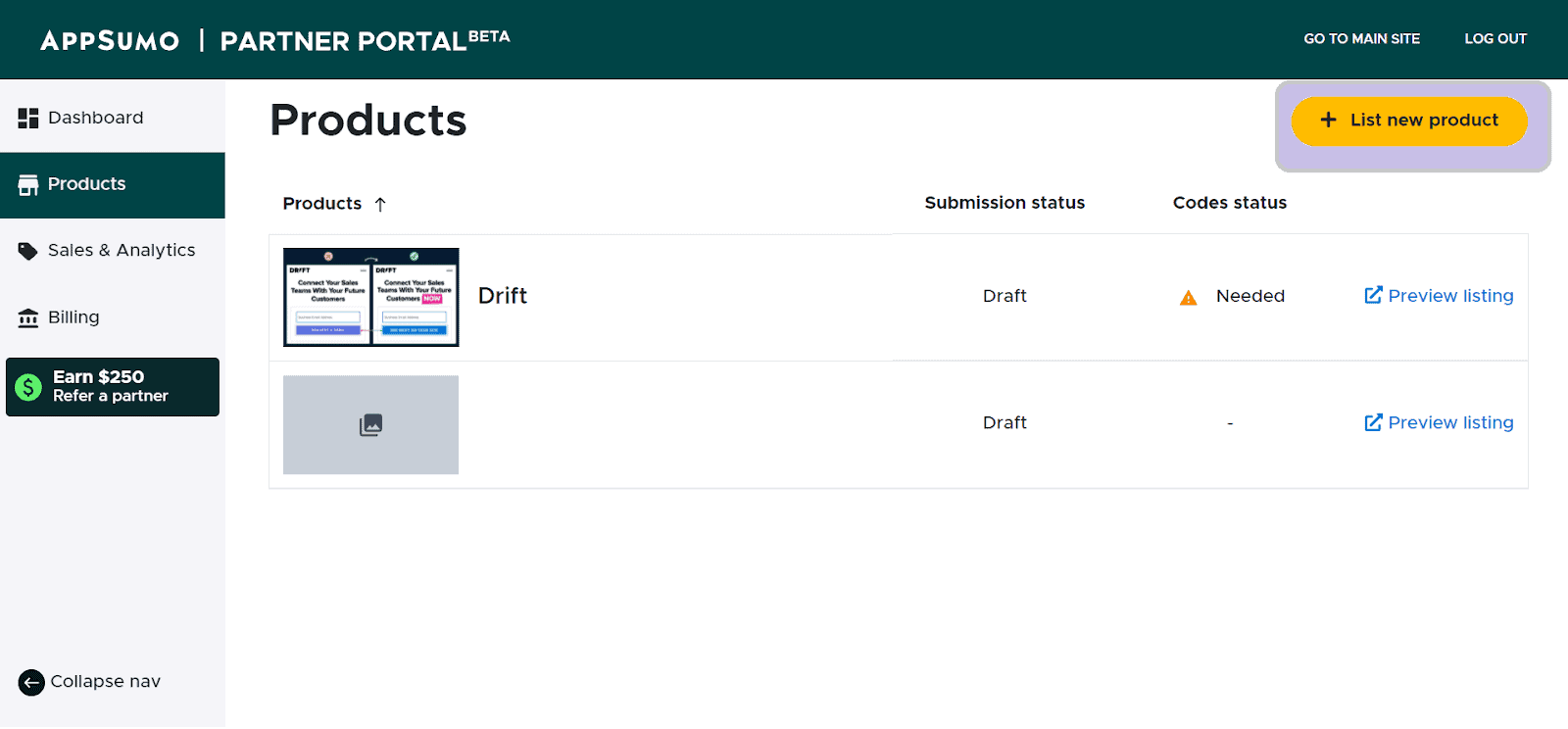
AppSumo is a lifetime deal platform, not a traditional marketplace. Products get significant exposure during deal periods, which can generate substantial initial revenue and user acquisition.
Pros
- Massive exposure during deal periods (email list of 1M+ deal seekers)
- Fast revenue injection for launches
- Customer email ownership
- Built-in affiliate tracking
Cons
- Lifetime deal model eliminates recurring revenue
- No license management system
- No ongoing marketplace presence after deal ends
- Deal terms often require steep discounts (80%–90% off regular price)
- Customer base expects lifetime access with no renewals
The tradeoff: Lifetime deals impact long-term revenue potential but can validate product-market fit and build an initial user base fast. This approach works best for launches, funding initial development, or products where volume matters more than per-customer lifetime value.
Our article on selling on the AppSumo marketplace details the full tradeoffs from a Freemius maker’s experience.
Shared limitations of WordPress marketplace alternatives
TemplateMonster, Creative Market, AppSumo — they all solve some Envato problems. But they share the same structural constraint that got you looking for alternatives in the first place: you’re stuck building on someone else’s platform.
You don’t own direct relationships, you can’t control the checkout experience, and you remain dependent on marketplace rules that can change without your input.
The shared limitations across marketplaces include:
- Customer data restrictions: Limited or no access to buyer contact information
- Pricing constraints: Platform-defined structures that may not fit your business model
- Policy dependency: Terms of service changes can impact your business overnight
- Commission structures: Ongoing percentage cuts that scale with your success
- Brand dilution: Your products compete for attention alongside thousands of others
Whether you’re moving to another marketplace or switching to a merchant of record model, the migration process requires planning. A rushed move risks losing customers, breaking license activations, and creating support chaos.
How to migrate from Envato without losing customers or revenue
Here’s a structured approach to transition from Envato.
Step 1. Audit your products, licenses, and subscriptions
Document everything before you move: active licenses, subscription statuses, transaction data you can export, and any platform-specific dependencies.
Step 2. Choose your selling model and platform
Based on the criteria covered earlier, decide whether another marketplace, a self-hosted solution with payment processing, or a merchant of record fits your needs.
Step 3. Set up checkout, licensing, and tax compliance
Your new infrastructure handles purchases, delivers license keys, manages activations, and complies with global tax requirements. MoR solutions like Freemius handle this automatically; other approaches require assembling multiple tools.
See the complete guide to selling WordPress plugins for more on building your infrastructure.
Step 4. Notify customers and run a migration window
Communication matters. Let existing users know about the transition, explain any benefits, and consider offering incentives for early migration.
Step 5. Redirect traffic and track recovery
Update all links pointing to your old marketplace listings. Monitor conversion rates on your new platform and adjust based on what the data shows.
Pick the Envato alternative that lets you sell on your terms
The best Envato alternative depends on what kind of business you’re building.
If you need quick exposure with zero setup: Marketplaces like TemplateMonster or Creative Market get you in front of buyers fast. You’ll pay for it in higher fees and lost customer relationships, but you’ll get traffic.
If you’re building a sustainable WordPress product business: Freemius gives you what marketplaces structurally can’t — full data visibility, pricing control, and direct relationships — while handling all the operational complexity (payments, taxes, licensing, subscriptions) you’d otherwise build or buy separately.
The question isn’t just “where can I list my product?” It’s “what kind of business am I building, and what infrastructure supports that?”
If you’re ready to start selling directly, create a free Freemius account and start with the five-minute SDK integration.
Detailed step-by-step documentation for both migration paths:
If you have specific questions about migrating your existing product, get in touch with our team via [email protected].
FAQs about Envato alternatives for WordPress sellers
What happened with Envato and why are sellers leaving?
Shutterstock acquired Envato in 2024, raising concerns about platform priorities shifting away from WordPress products, given the lack of new management team’s familiarity with the WordPress ecosystem and its history.
Since the acquisition, Envato has removed WordPress integrations, ended free themes programs, and reorganized Envato Elements with AI-focused limits. This shows a shift in focus away from software products as Shutterstock primarily deals with stock files and digital assets, impacting the support and resources available for WordPress developers.
Many WordPress product makers are also exploring alternatives to Envato due to concerns over high fees and lack of support for software products.
Is there a better marketplace than ThemeForest for WordPress themes?
TemplateMonster and Creative Market are popular solutions, though each involves tradeoffs in audience size, commission rates, and seller control. The “better” option depends on whether marketplace reach or customer ownership matters more.
How much do Envato alternatives typically charge?
Commission rates for Envato alternatives vary widely — from flat monthly fees to revenue shares ranging from 30% to 60%. When comparing, factor in payment processing costs and whether you own the email list, not just the headline commission percentage.
Can you sell WordPress plugins without using a marketplace like CodeCanyon?
Yes. You can sell directly from your own website using a merchant of record like Freemius, which handles payments, licensing, and tax compliance while you own the customer relationship and control your pricing. This approach gives you full business ownership without the technical complexity of building checkout, subscription billing, and global tax compliance yourself.
Do Envato alternatives handle VAT and international sales tax?
Most marketplaces handle taxes for sales through their platform. If you sell independently, you either use a merchant of record that manages global tax compliance or you’re responsible for calculations, collection, and remittance yourself.
Does Envato’s marketplace model work for software?
Not entirely. Envato’s marketplaces provide built-in traffic and payment processing, but the economics don’t work well for software businesses long-term.
As of July 1, 2026, all Market authors pay a flat 50% author fee — the exclusivity tier no longer exists. The one-time license model means you provide years of support and updates without recurring revenue.
You get no email list, can’t allow users to subscribe to renewals, and can’t send direct security notifications, making you dependent on Envato’s algorithms for all future sales and their timeline for pushing critical updates.
On top of that, only those who made over $75,000 in sales get Google Analytics for their seller profile to track conversions, meaning most sellers operate without basic performance data.